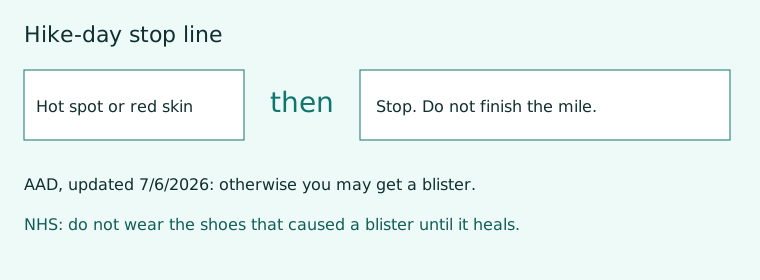
Ignoring a red hot spot and finishing the hike in the same shoes wastes the skin that was still intact. NHS says not to wear the shoes that caused a blister until it heals. The American Academy of Dermatology says to stop when the spot hurts or the skin turns red, because otherwise a blister may form.
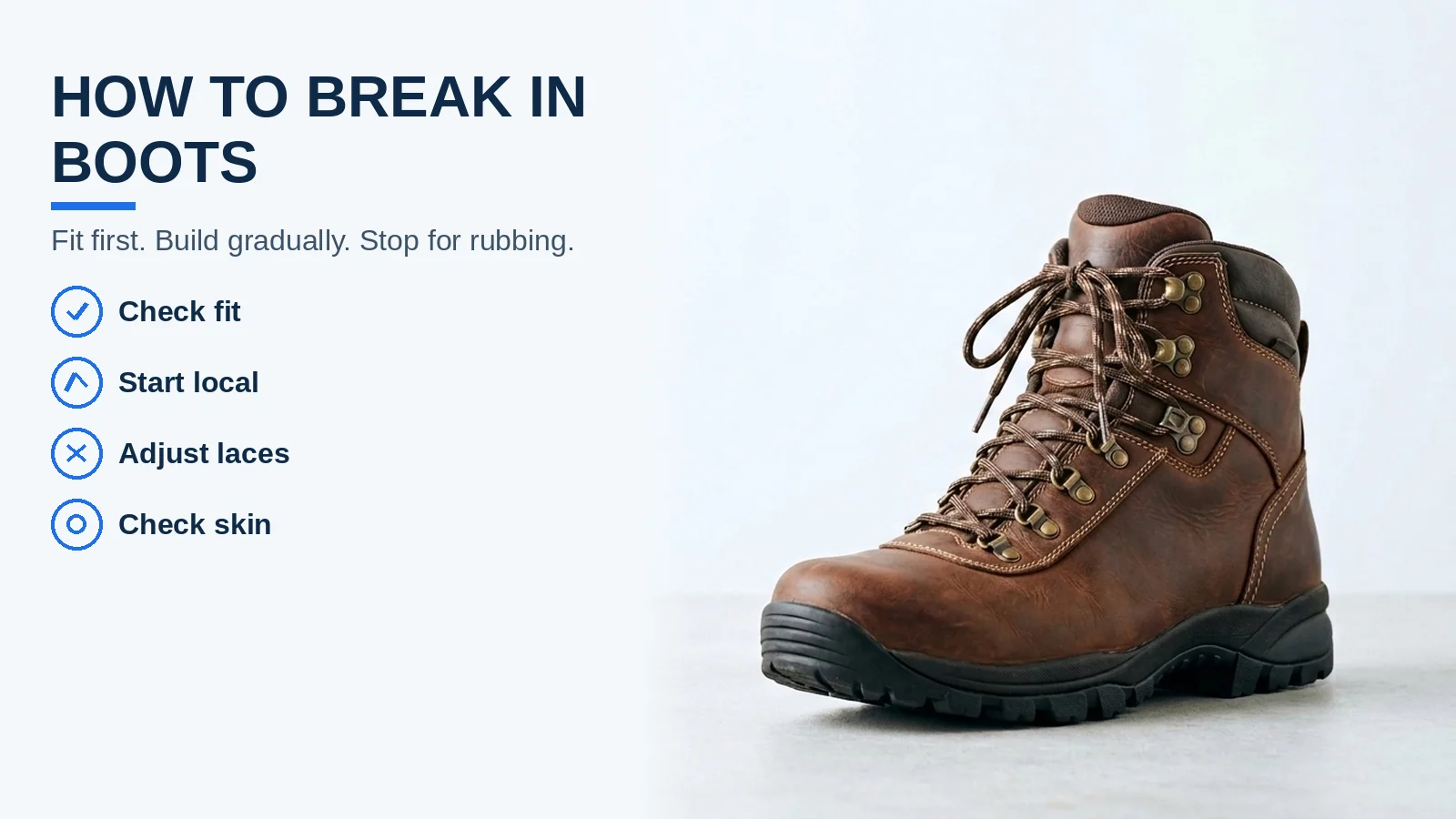
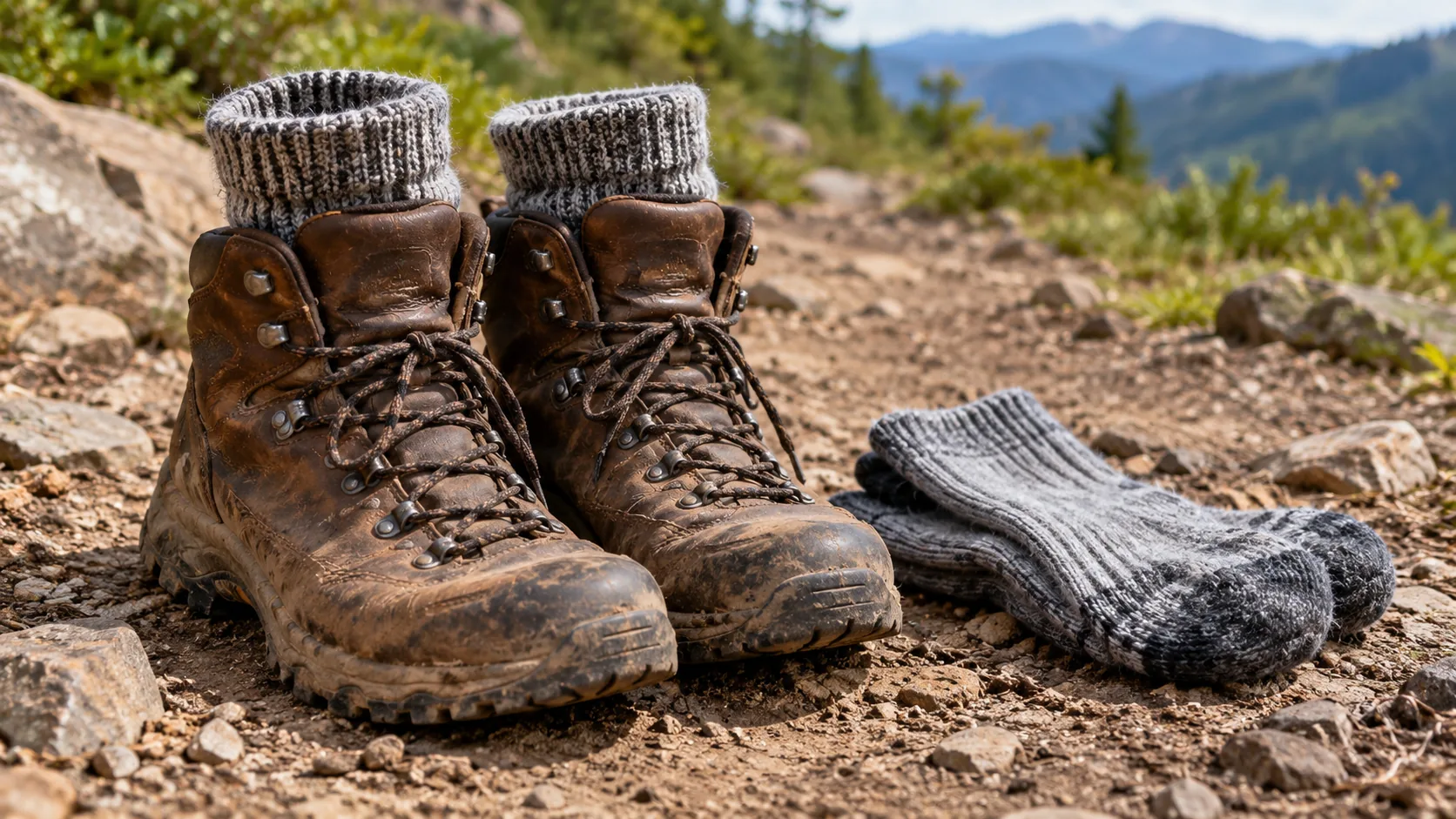
The photograph on this page is generic trail gear. It is not a measurement of sock thickness or shoe fit.
This is general information from those two public pages, fetched on 20 October 2026. It is not a diagnosis. Diabetes, poor circulation, or a blister that looks infected needs a clinician. NHS says you will not usually need a GP for an ordinary blister, and it lists when to use NHS 111.
Stop before the pocket of fluid
NHS describes a blister as a small pocket of clear fluid under a layer of skin. Blisters develop to protect damaged skin. Friction, burns, and skin reactions are the usual causes. A blood blister means blood vessels in the skin were damaged too. An infected blister can be hot and filled with green or yellow pus. Surrounding redness can be harder to see on brown or black skin. NHS says not to ignore an infected blister.
AAD’s prevention line is earlier than that pocket. Stop the activity immediately if you have pain or discomfort, or if the skin turns red.
Rules-of-Thumb: If the skin at a rub point turns red, or the spot hurts, stop. AAD says continuing is how the blister forms.
What to change before the long day
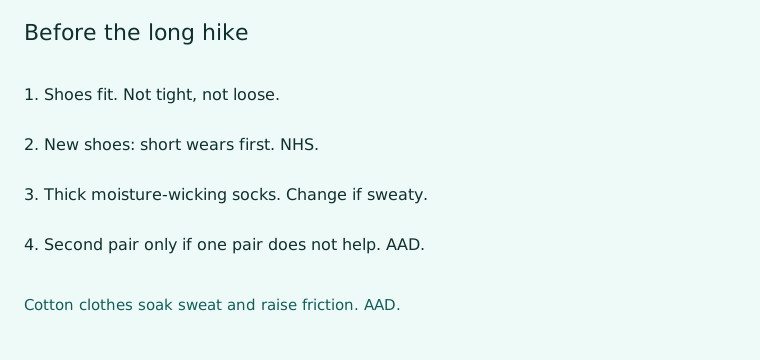
NHS, for people who often get friction blisters on the feet, lists four clothing and shoe steps: comfortable well-fitting shoes; new shoes worn for short periods until they are comfortable; thick socks during exercise, such as moisture-wicking sports socks; and frequent sock changes if the feet sweat.
AAD, updated 7/6/2026, is more specific about the sock and the fit window. Wear nylon or moisture-wicking socks. If one pair does not help, try two pairs. Shoes should not be too tight or too loose. During activity, wear moisture-wicking loose clothing and avoid cotton, because cotton soaks up sweat and that moisture can lead to friction. For problem areas, consider adhesive moleskin or another soft bandage, applied securely. Powder or petroleum jelly on problem areas can reduce friction where skin rubs skin or clothing.
Sock fiber comparisons, including what the studies did not show, are in the long-distance walking socks guide. Tape evidence is in blister tape for hiking. Rubbing at the hip belt is a different surface; that is the anti-chafe balm guide.
| Check | Source line | Dominant failure mode | Prevention |
|---|---|---|---|
| Shoe fit | AAD: not too tight and not too loose. NHS: well-fitting, and new shoes only in short wears at first. | A long first day in new or poorly fitted shoes | Short wears until the shoes are comfortable, then the hike |
| Socks | NHS: thick moisture-wicking socks, changed when feet sweat. AAD: one pair first; two pairs if one does not help. | A wet cotton layer left on for the whole day | Change damp socks. Avoid cotton clothes that hold sweat. |
| Hot spot | AAD: stop if it hurts or the skin turns red | Finishing the climb on red skin | Stop, cover the spot with a soft bandage if you use one, then reassess the shoe |
| After a blister | NHS: do not burst it; do not wear the shoes that caused it until it heals | Draining it to keep the same boots on | Soft plaster or padded dressing. NHS says a pharmacist can suggest a hydrocolloid dressing. |
Two healing windows, and a 5-day hike
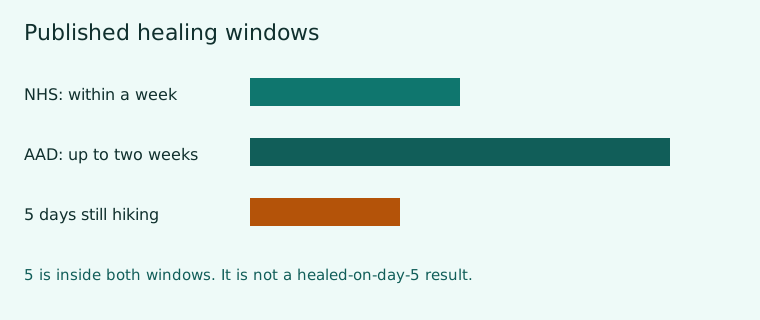
NHS says blisters often heal on their own within a week. AAD says most blisters heal on their own in one to two weeks, and not to resume the activity that caused the blister until it has healed. NHS separately says not to wear the shoes or use the equipment that caused the blister until it heals.
Those sentences are not the same clock. A week is the NHS “often” line. Two weeks is the long end of the AAD line. Neither page prints a day-by-day healing curve.
Upper hold days = 14, using the long end of AAD’s one-to-two-week sentence.
Worked example. A blister appears at the start of a hike that still has 5 days of the same shoes and the same route. 5 is less than 7 and less than 14, so those 5 days sit inside both published windows. They are not a result that says the skin is healed on day 5. NHS still says to keep off the shoes that caused it until it heals.
When the blister is not an ordinary friction blister
NHS says get help from NHS 111 if a blister is very painful or keeps coming back; if it looks infected (hot, and filled with green or yellow pus); if the surrounding skin looks red, which can be harder to see on brown or black skin; if it is in an unusual place such as the eyelids, mouth, or genitals; if several appear for no reason; or if a burn, scald, sunburn, or allergic reaction caused it.
Do not burst the blister yourself. Do not peel the skin off a burst blister. If it has already burst, NHS says wash your hands before touching it, let the fluid drain, and then cover it. Do not pick at the remaining skin.
People with diabetes or reduced feeling in the feet should not use this page as their foot plan. Ask a doctor or podiatrist how to check the feet and which shoes to wear. A training build-up that changes one load at a time is the ruck march plan, and it does not replace that clinical check.
A hike you can defend
- Wear shoes that are already comfortable. If they are new, give them short wears first, as NHS describes.
- Use thick moisture-wicking socks and change them when your feet sweat. Add a second pair only if one pair has already failed you, which is the AAD step.
- At the first red or painful spot, stop. Cover a problem area with a secure soft bandage if you use one.
- If a blister forms, leave it intact, cover it, and keep off the shoes that caused it until it heals.
- Use the NHS 111 list for infection, repeat blisters, burns, and blisters in unusual places. Do not turn the 14-day upper end into a personal healing date.