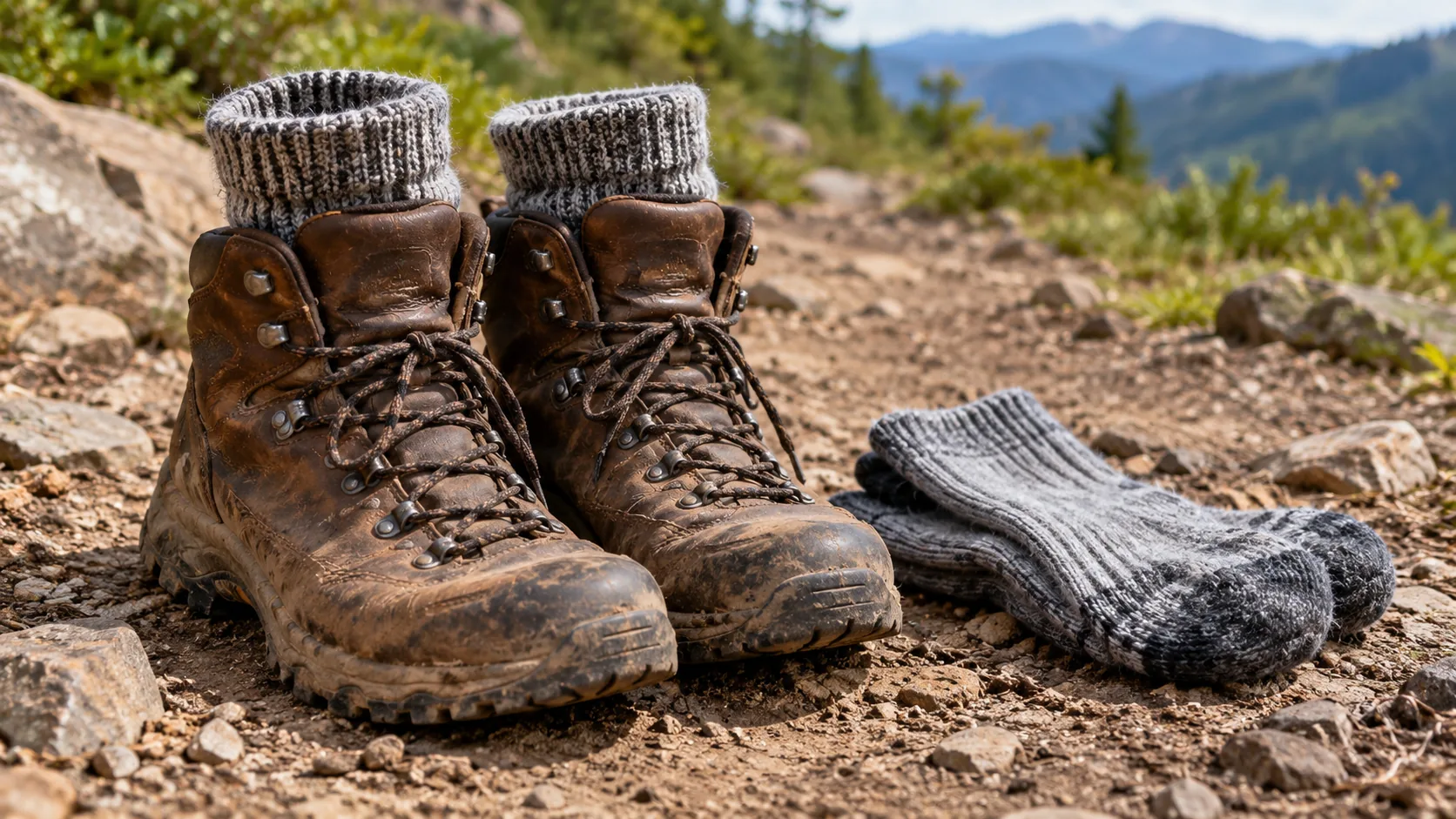
Rain that leaks over a boot collar soaks the sock and can leave the skin wet for the rest of the walk. Check the sock cuff against the sole before you add another layer.
Keeping feet dry while hiking in rain starts with where the water is. A wetter cuff, or water at the boot opening, matches the path in The Mountaineers’ page of 27 October 2016: rain pants send water past the legs and over the outsides of the boots, and gaiters do not stop rain at the top. A damp sole with a dry cuff is the sweaty-foot case on the NHS blisters page, last reviewed 22 November 2023, which says to change socks frequently. That page does not prove the dampness is sweat. Feet that hurt, swell, or feel heavy after staying wet match the CDC message of 26 August 2026: trench foot occurs when feet stay wet for long periods, and you should seek medical attention right away if you suspect it. Those copies give no waterproof rating, temperature, or mile count.
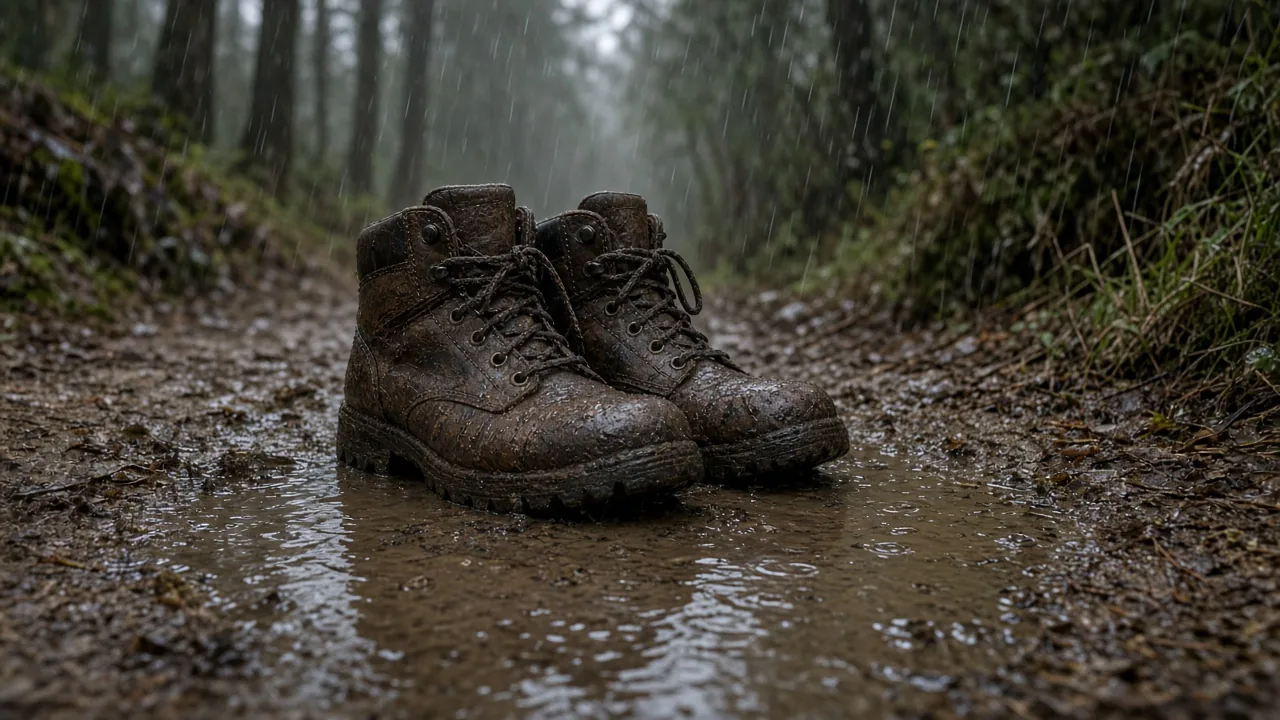
Where is the water getting in?
Compare the cuff with the sole. The three rows below are the checks this page can support. The last three columns stay blank because the copies we read do not state them.
| What you find | Supported next step | Waterproof rating | Temperature | Miles or hours |
|---|---|---|---|---|
| Cuff wetter than the sole, or water at the opening | The Mountaineers say rain pants direct water past the legs, over the outsides of the boots. Gaiters keep feet dry for a while and do not stop rain at the top. Wet plants that brush the knees can soak feet in minutes, on that same page. | |||
| Sole damp, cuff dry, no water standing in the boot | The NHS blisters page says to change socks frequently if your feet sweat. This page has no test that separates sweat from a slow leak. | |||
| Feet hurt, swell, or feel heavy | The CDC says trench foot occurs when feet stay wet for long periods, and that it causes feet to hurt, swell, and feel heavy. Seek medical attention right away if you suspect it. |
Takeaway: Use the row you can see on the sock. Do not fill the empty columns from a boot label or a guess.
What do rain pants and gaiters change?
Rain pants change the path of water down the leg. They do not dry a sock that is already soaked.
The Mountaineers page, adapted from Karen Berger, says to put rain pants on so water runs past the legs and over the outsides of the boots. If rain pants are too warm, that page says gaiters keep feet dry for a while but will not keep rain from going in the tops of the boots. After the rain stops, it says to keep a pack cover and gaiters on, because trees keep dripping for several hours and wet plants at knee height can soak feet in minutes.
If the jacket has pit zips, the same page says to open and close them to cool off or warm up. That is a control for the torso. It does not empty a wet sock.
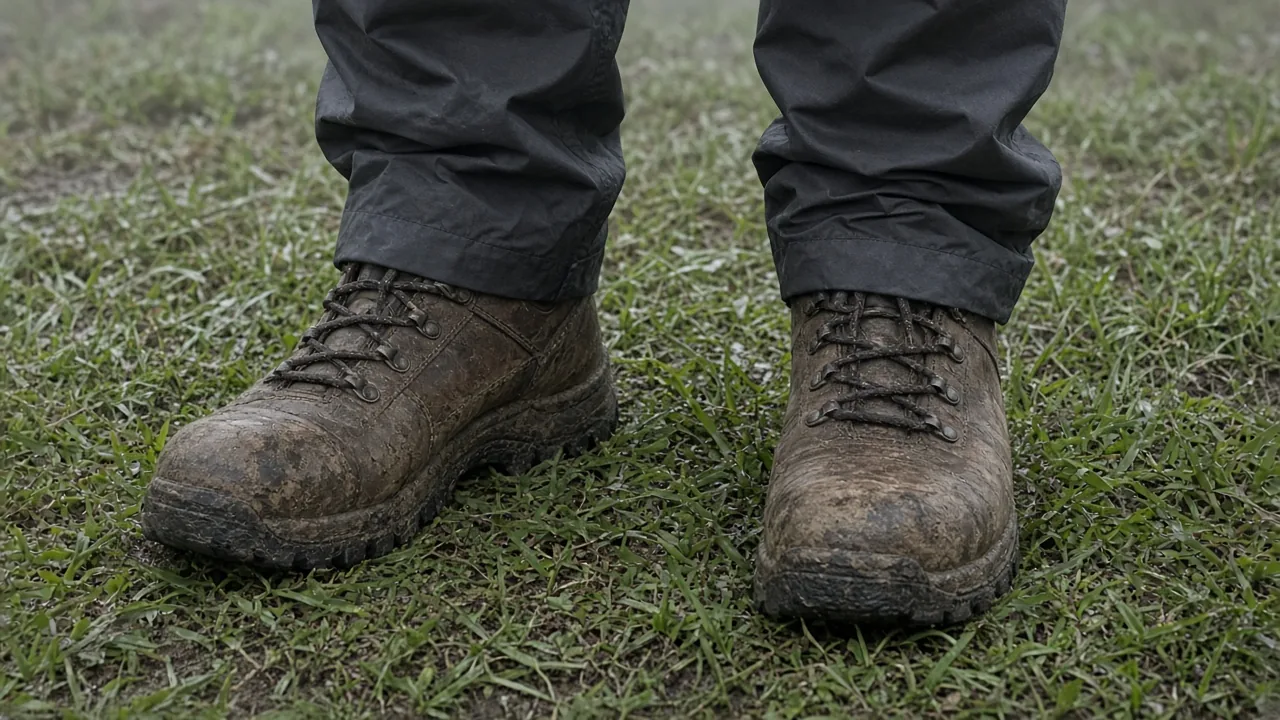
This page did not test any boot, pant, or gaiter. If water is already inside the sock, another layer on the outside does not remove it.
Takeaway: Rain pants are for water still running down the outside. A soaked sock needs a dry pair.
When do you change socks and look at the feet?
Change to a dry sock when you have one and a place to put it on. Then look at the skin.
The NHS blisters page says people who get sweaty feet should change socks frequently, and that friction blisters are mostly from rubbing, burns, or a skin reaction. Berkshire Healthcare’s foot-care page, read from a copy saved on 11 October 2026, says to wash feet every day in warm soapy water, dry them well especially between the toes, and wear well-fitting socks changed every day. On a trail with no wash, the step you can still take is the dry sock and a look at the skin. Fiber, cushion, and how many spares to pack are in the long-distance walking socks guide.
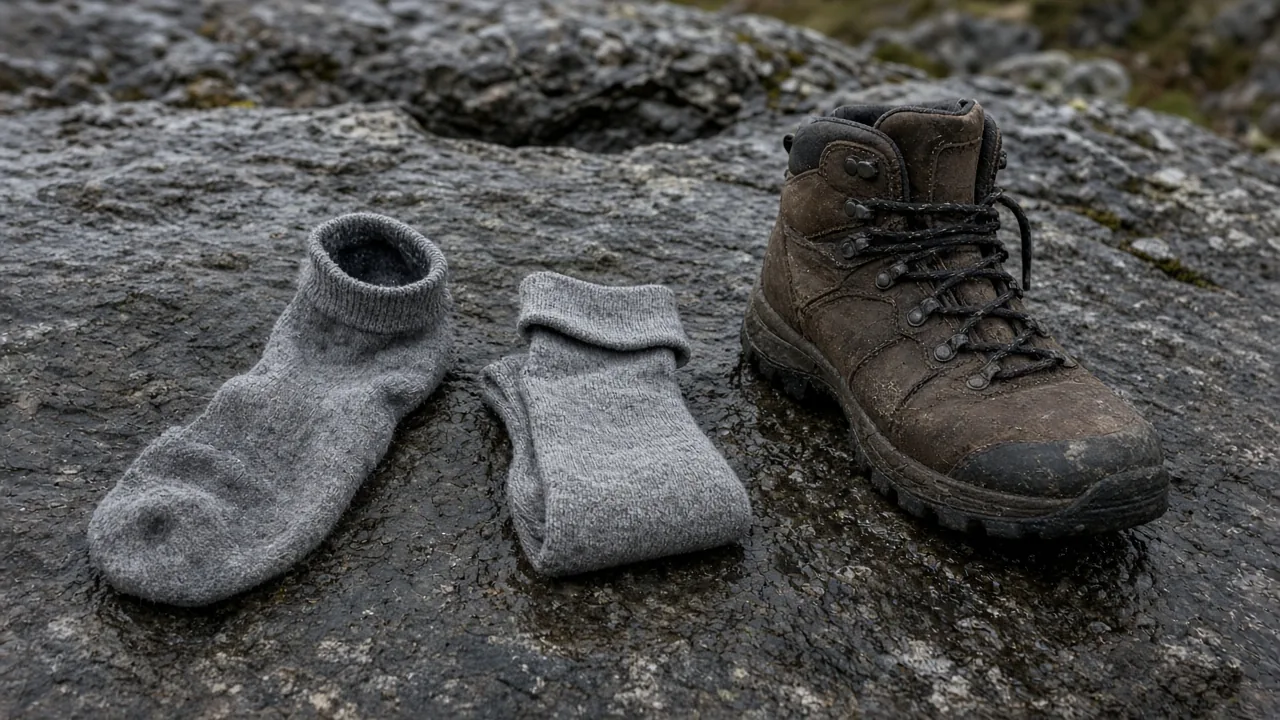
If a blister is already there, the NHS page says to keep it as clean as possible, gently wash the skin, pat it dry, and cover it with a soft plaster or padded dressing. Do not burst it yourself, and do not peel the skin off. Leave off the shoes that caused it until it heals. In the UK, use NHS 111 when a blister is very painful, keeps coming back, or looks infected: hot, and filled with green or yellow pus. Redness around it can be harder to see on brown or black skin. NHS 111 is a UK service.
The Mountaineers say that if it is still raining the next day, put the already soggy socks back on and save the dry pair for the end of the day. That is their packing tip for a second wet day. It is not a reason to keep walking when the feet hurt, swell, or feel heavy.
Takeaway: Use the dry spare while the skin is still comfortable enough to walk. Their next-day tip is for when the dry pair has to last until you stop.
When do wet feet need medical help?
Seek medical attention right away if you suspect trench foot. This page sets no hour limit, because the CDC page gives none.
The CDC message says trench foot occurs when feet are wet for long periods of time, and that it causes feet to hurt, swell, and feel heavy. It says to clean and dry the feet and to wear clean, dry socks. It says to seek medical attention right away if you suspect someone has trench foot. The copy read here states no temperature and no number of hours. This page adds neither.
That message also describes soaking affected feet in warm water for 5 minutes and elevating bare feet while sleeping. Those are steps on a disaster page. This article does not walk through them. Drying the boots after you stop is a separate job, in how to dry hiking boots overnight.
If you have diabetes, less feeling in the feet, poor circulation, an open wound, or a foot that looks infected, ask a doctor or a podiatrist before you treat the day as an ordinary walk. This page is general information. It does not diagnose a foot.
A check you can do while you are still walking
- Cuff wetter than the sole, or water at the opening: rain pants if you have them. Gaiters do not close the top.
- Sole damp and cuff dry: change socks when you have a dry pair. That finding does not name the source.
- A blister that is very painful, keeps coming back, or looks infected: NHS 111 in the UK, or a doctor where you are.
- Feet that hurt, swell, or feel heavy after staying wet: medical help, as the CDC message says.
- The walk is over and the boots are still wet: the overnight drying page, not another rain layer.
When this does not apply
Sock fiber, a waterproof rating, and camp drying sit on other pages. This page does not cover river crossings, and it does not treat a foot.
How this page was put together
The rain-pants, gaiter, dripping-tree, and next-day sock lines come from The Mountaineers page dated 27 October 2016, adapted from Karen Berger, read from a copy saved on 11 October 2026. The trench-foot lines, including the 5-minute warm soak that this page does not teach, come from the CDC message dated 26 August 2026. Blister care and the sweaty-sock change come from the NHS blisters page last reviewed on 22 November 2023. Daily washing, drying between the toes, and a daily sock change come from Berkshire Healthcare’s foot-care page, saved on 11 October 2026. Blank cells are blank because those copies do not state a waterproof rating, a temperature, or a mile or hour count. This page ran no boot or sock trial. Updated October 2026.