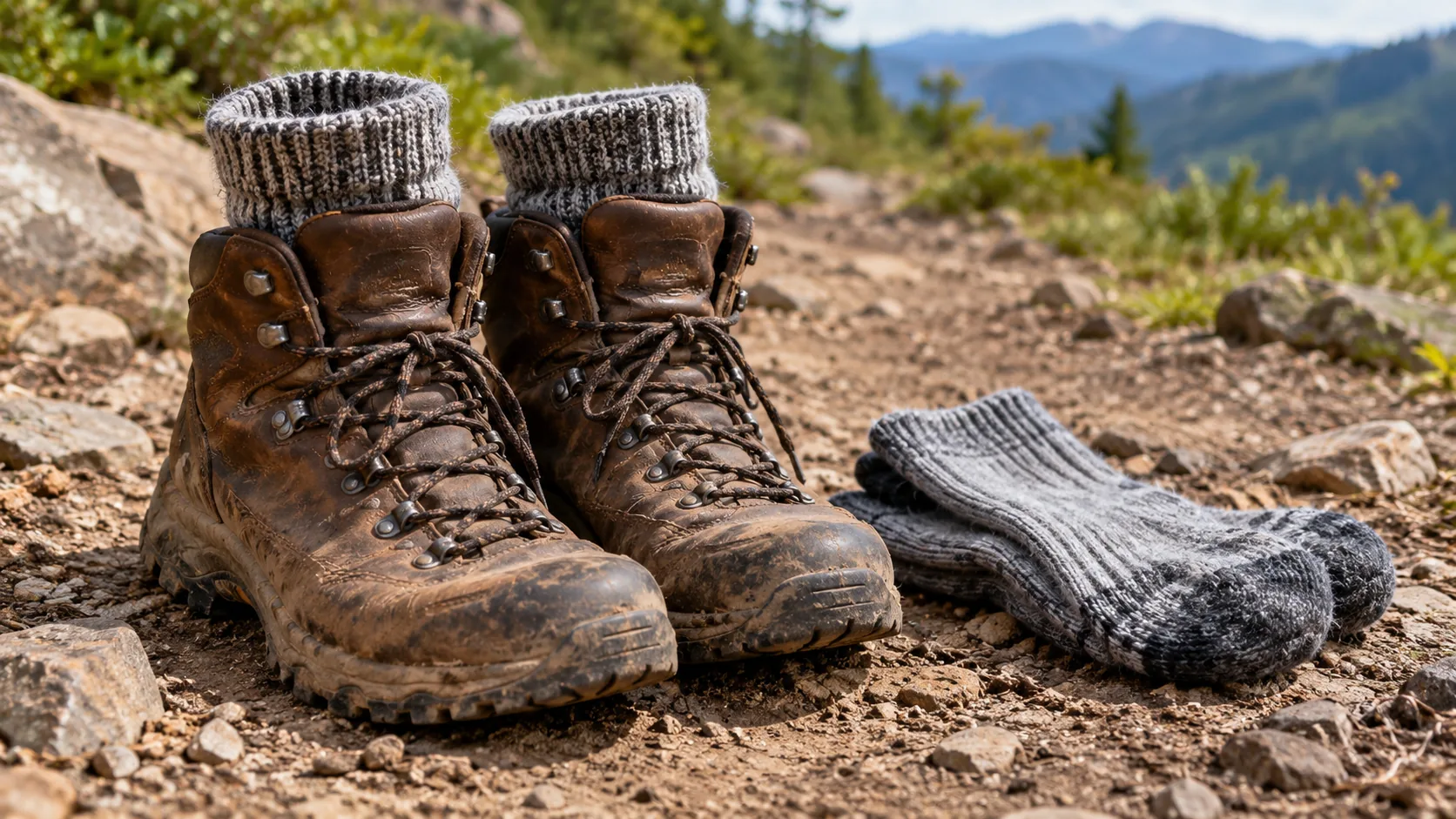
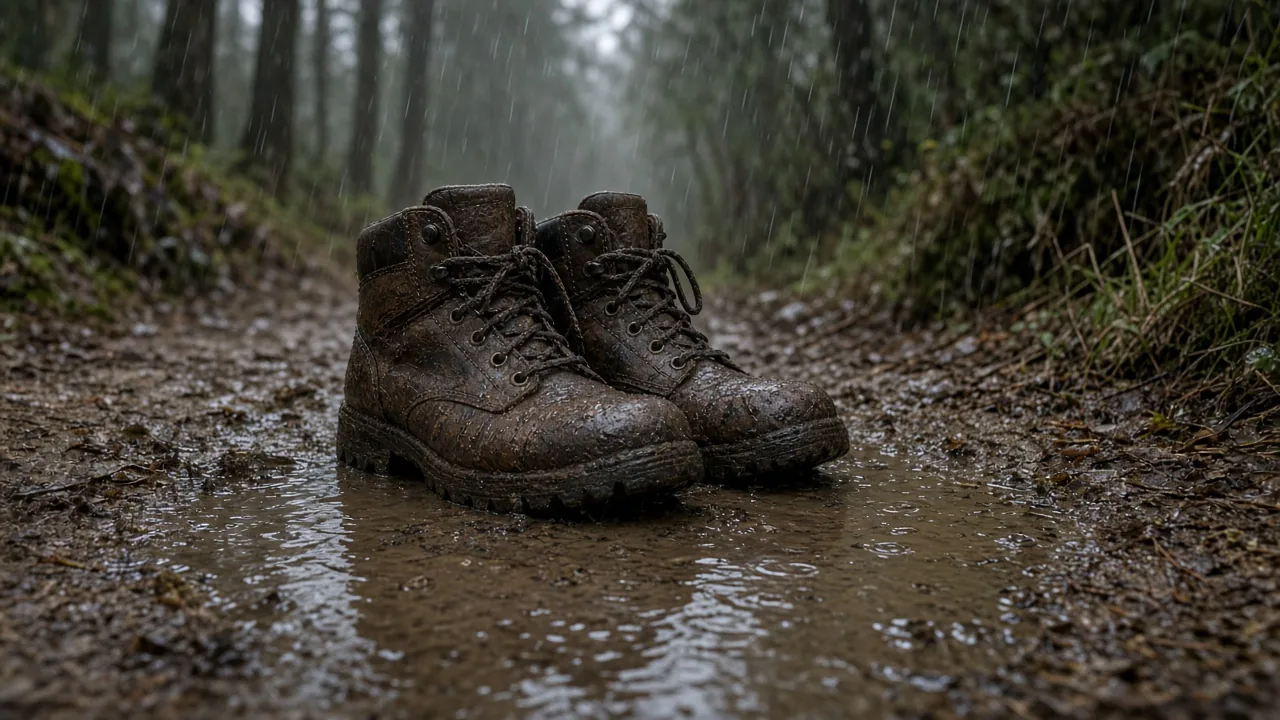
A wet boot left closed can stay damp into the next morning, and direct heat can damage the glue and leather. Pull removable insoles, keep the boots in dry moving air, and use the row that matches the power you actually have.
How to dry hiking boots overnight depends on power, whether the insoles come out, and whether the air around the boots is dry and moving. LOWA’s overnight guide for its own boots, saved on 11 October 2026, says to clear the mud, take out removable insoles and laces, and keep those boots away from a heater, a wood stove, a campfire, and a blow dryer. That page also describes loose newspaper or kitchen roll, a non-heated fan where you have a power outlet, and a dry room. LOWA’s boot-camp page is a different job: after an internal warm-water clean of its Gore-Tex boots, full drying in a ventilated room away from heat takes about 48 to 72 hours. The table below is the camp choice. It adds no drying time of its own.
What should you do before any overnight drying?
Clear mud if you can, take out parts that come out, and keep direct heat off the boots.
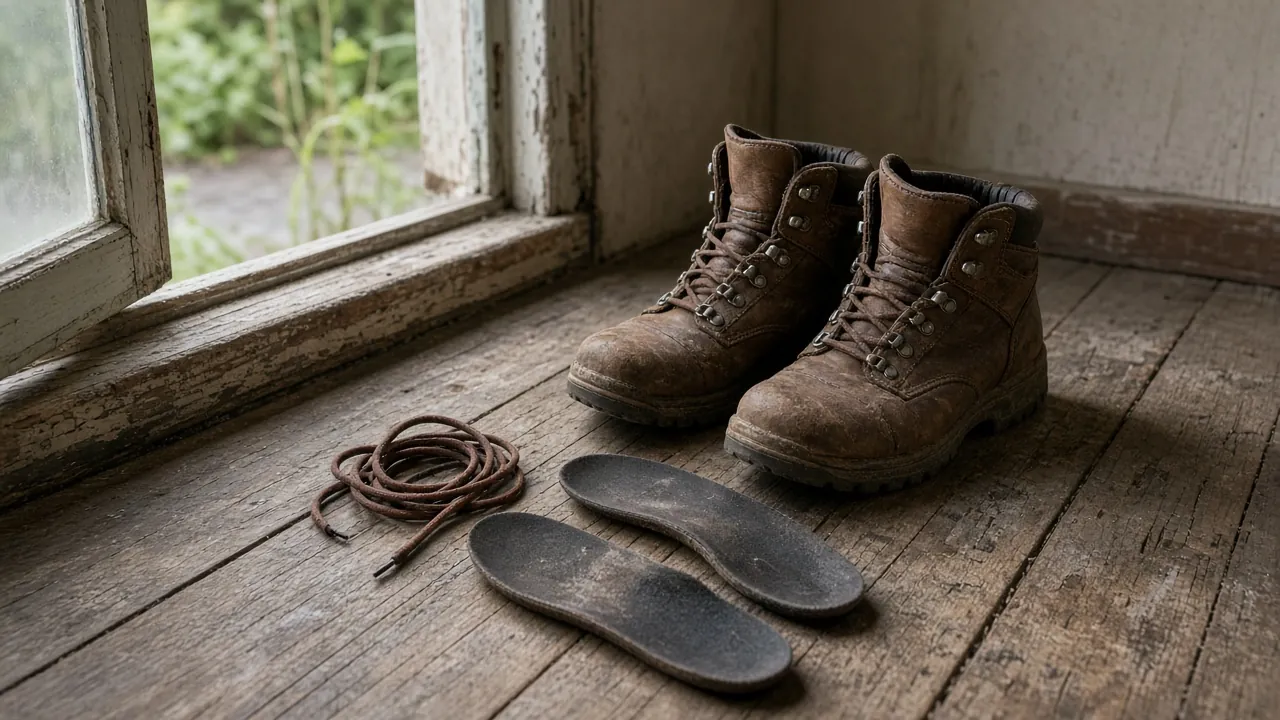
LOWA’s overnight page, written for LOWA boots, says to start as soon as the walk ends so the evening is free for drying. Mud left on the leather while it dries can leave a stain, so clear the dirt first. If the insoles come out, take them out. Each piece can then dry on its own, and air can reach the inside of the boot. Take the laces out for the same reason. The page says to keep the boots out of direct heat. A heater, wood stove, or campfire can warm the room, but the boots should sit away from them. A blow dryer is on that avoid list too, because too much heat can damage glue and other materials that hold the boot together. The page gives no temperature for that warning.
LOWA’s boot-camp page repeats the heat limit after cleaning. Dry the boots away from sunlight and away from a heat source such as a radiator, because that heat can make the leather brittle. The place it names is a dry, ventilated room. Those notes belong to LOWA footwear. For any other pair, follow that maker’s care card before you copy these steps.
Which overnight setup matches power, insoles, and airflow?
Use the row you can meet tonight. A fan in a dry room does not transfer to a wet tent.
| What you have tonight | What to set up | Limit |
|---|---|---|
| Power outlet, insoles come out, dry room | Take out insoles and laces. LOWA describes a non-heated fan moving air through the boots, a towel under them for drips, and the fan left on overnight when you can. Keep the room dry. LOWA regards a non-heated fan as one of the most effective and safest overnight methods for its boots. | The overnight page gives no hour count for the fan. |
| Power outlet, insoles fixed in place | Open the collar and take the laces out if they come out. Point the non-heated fan at the opening. | The hidden face of a fixed insole stays inside the boot. |
| No power outlet, insoles come out, shelter with moving air | Take out insoles and laces. If you carried newspaper, kitchen roll, or a towel, LOWA says to pack it loosely through the whole boot and to replace it once it is soaked. LOWA says paper that is packed tight absorbs water less effectively. A towel can lift the first water: LOWA says to leave it a few minutes, then switch to a dry towel. Set the boots where air moves and rain stays off them. | No hour count. Soaked paper stops helping until you replace it. The few minutes are for the first towel, not a full dry. |
| No dry moving air | Take out what comes out, and keep the boots out of pooled water. | LOWA calls a dry room necessary, because a cold wet corner wets the boots again. Have a dry sock ready for morning. |
| At home, with a bucket of rice or cat litter | LOWA titles this method rice or cat litter in a sock. The steps it prints are a bucket filled about one inch deep, the boots set in, the socks inserted, a lid on overnight, and the material replaced when it is wet. | This needs a bucket and a dry supply in a house. It is not a required trail item. |
| Powered boot dryer at home | LOWA’s overnight page says to push the dryer pipe to the toe and leave it for one to two hours for a completely dry boot. | That clock is the maker’s instruction for that gadget on that page. This site has no trial of the dryer. |
People also search for the best way to dry hiking boots, and for a fast way. The two LOWA pages name no single winner. The fan is the overnight option that page calls one of the most effective and safest. The dryer carries the one-to-two-hour instruction. The 48-to-72-hour span sits on the wash described further down, and it stays with that wash.
Takeaway: Match the row to the power and the insole you have tonight, and keep every hour count attached to the procedure that stated it.
How do you dry hiking boots on a multi-day walk with no power?
Open the boots, dry your feet, and put the boots where air moves and rain does not land.
A multi-day walk often has no fan and no dry room. The steps that still follow the LOWA notes are the ones that need no socket:
- Start when you stop, so the night is available.
- Wipe mud off the outside when you can do it without pouring water into the boot.
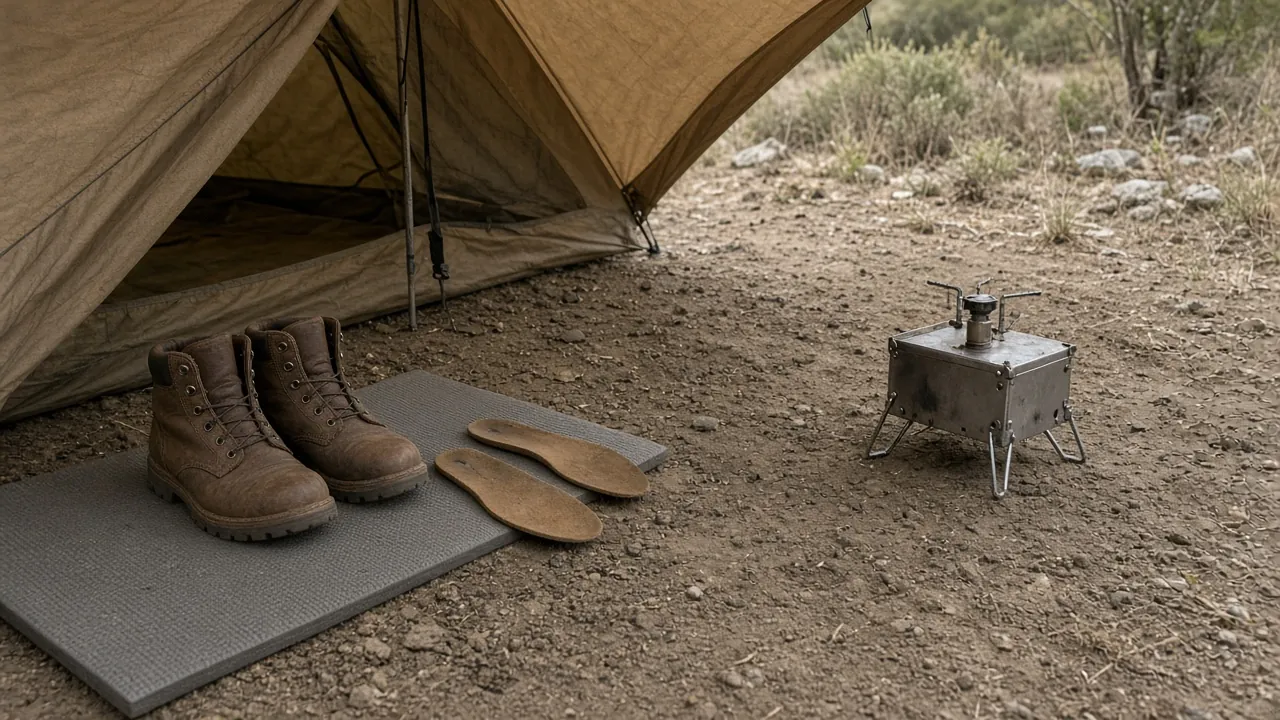
- Take out insoles that come out, and take the laces out.
- If you carried paper or a towel, stuff it loosely and change it when it is soaked.
- Leave the boots under shelter in moving air, off the stove and off the fire.
- Clean and dry your feet, and put on clean, dry socks when you have a spare. The CDC trench-foot message, dated 26 August 2026, lists those foot steps. It also says to soak affected feet in warm water for 5 minutes, and to elevate bare feet when you sleep.
The 5-minute warm soak is a foot step on that CDC page. It does not dry the boot. The page says trench foot occurs when feet stay wet for long periods, and it does not turn that phrase into an hour limit for a hike, so this page adds none.
This page sets no rule for putting boots inside a sleeping bag in cold weather. Use the boot maker’s cold-weather note and the forecast you have.
Why keep hiking boots off high heat?
LOWA says direct heat can damage the materials that hold its boots together, and that a radiator or sunlight can make the leather brittle.
That is the limit on drying hiking boots fast. A blow dryer is on LOWA’s avoid list for its boots. The powered boot dryer on the same overnight page is a separate device, with the one-to-two-hour instruction in the table. The LOWA pages read for this article give no temperature where heat becomes safe, so this page gives none. If another maker allows a low dryer, that instruction stays on that maker’s card.
What if the boots are still damp the next morning?
Treat the boots as damp. Use a dry sock, and check the feet before you treat the day as an ordinary walking day.
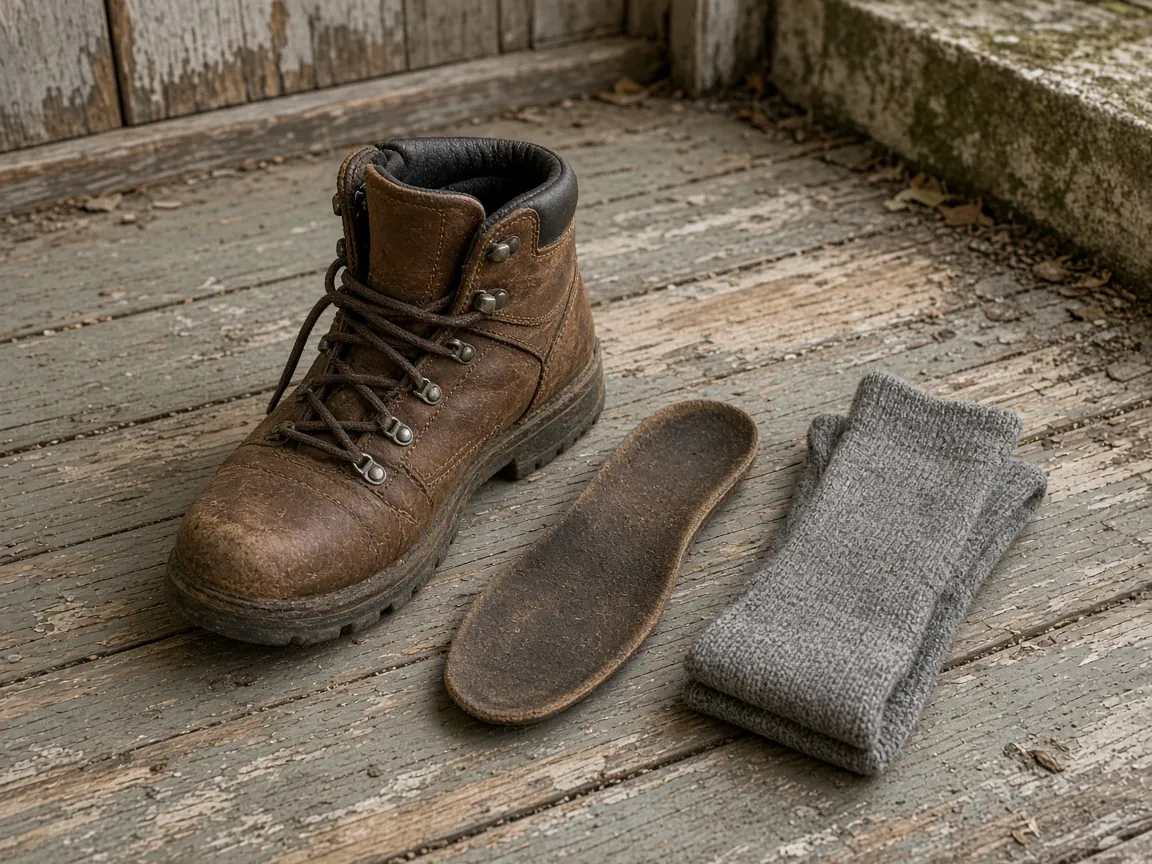
Feel inside the boot and under the insole. Damp to the hand means the boot is still damp. The 48-to-72-hour wash line below is one reason water can remain after a thorough wetting. Put on a dry spare pair for the walking day. Fit, fiber, and how many spares to carry are in the long-distance walking socks guide.
The CDC message says trench foot causes feet to hurt, swell, and feel heavy, and it says to seek medical attention right away if you suspect trench foot. Ask a doctor or a podiatrist about a foot that is severe or looks infected. The message dates from 26 August 2026 and gives no hike-hour cutoff.
If a blister is already there, the NHS blisters page, last reviewed on 22 November 2023, says to leave off the shoes that caused it until it heals. Get help from NHS 111 when a blister is very painful, keeps coming back, or looks infected: hot, and filled with green or yellow pus. Drying the boot does not replace that call.
At camp
- Mud wiped from the outside when that wipe does not soak the inside
- Insoles out, if they come out
- Laces out
- Boots off the stove, the fire, a radiator, and direct sun
- Feet cleaned and dried, with clean dry socks if you have them
Before sleep
- Paper or towel replaced once it is soaked
- A fan left on only when it is non-heated and the room is dry
- Boots kept out of a cold wet corner
- Bare feet elevated while you sleep, as the CDC message lists
Next morning
- Inside of the boot and the underside of the insole felt by hand
- Dry socks on for the day
- Medical help if you suspect trench foot
- The shoe that caused a blister left off until the skin heals, following the NHS page
Takeaway: A damp boot in the morning means a dry sock and a foot check. The overnight setup does not certify the boot as dry.
How do you dry hiking boots after washing?
Follow the maker’s wash, then the dry time that maker gives for that wash.
LOWA’s boot-camp page describes an occasional clean of the inside of its Gore-Tex boots. Take the insoles out, fill the boots with warm water to near the top of the membrane, leave them for about an hour, pour the water out, rinse, and let them dry. In a well ventilated room, away from a heat source, LOWA says full drying takes about 48 to 72 hours. Newspaper or a paper towel can help draw moisture out. That span is for that wash on those boots. It is not a timer for every rainy hike, and an overnight camp setup does not inherit it.
After the boots are dry, LOWA says to store them in a box or a shoe bag in a dry, ventilated place. A shoe tree, or dry newspaper, is for holding the leather’s shape in storage. That stuffing is a different job from the loose paper used while the boot is still wet.
When this does not apply
Boot odor and disinfecting sit outside this page. So do choices of rainwear, and any ranking of sock fibers. The page does not promise a dry boot by morning, and it does not treat a foot.
How this page was put together
The steps and the two time spans come from LOWA UK’s overnight guide and boot-camp page. The copies used here were saved on 11 October 2026, and those statements apply to LOWA footwear. The foot limits come from the CDC trench-foot message dated 26 August 2026 and the NHS blisters page last reviewed on 22 November 2023. Both were read from copies saved on 11 October 2026. This page ran no drying trial. Updated October 2026.