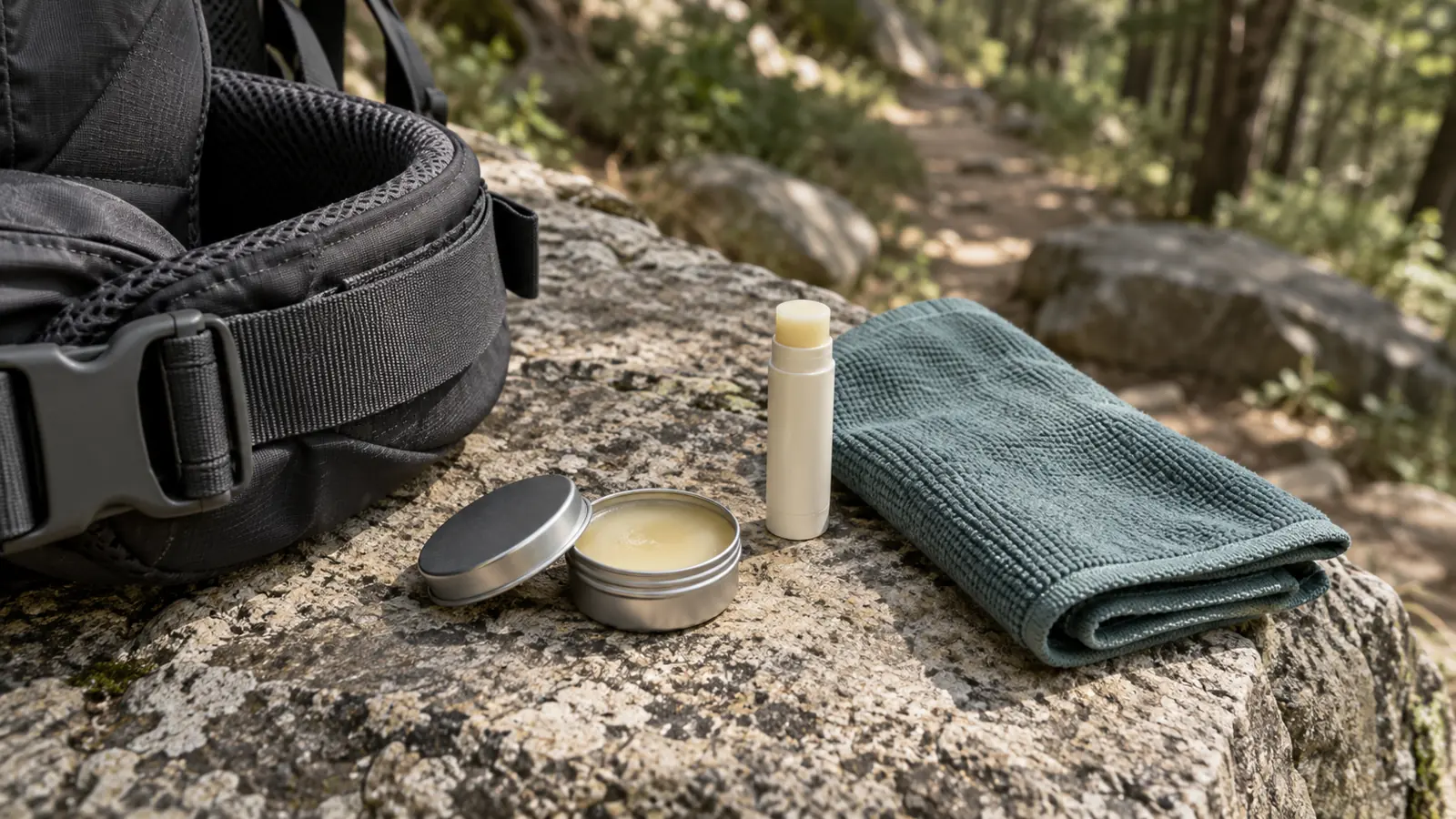
Ignore the first sting of chafing on a long walk and you risk raw, damaged skin that makes every remaining mile hurt. Anti-chafe balm is designed to help prevent this by putting a slippery or protective layer between skin and whatever rubs it; use it after you have dealt with the two main causes, moisture and badly fitting clothing.
Anti-chafe balm is a friction barrier for intact skin. You rub it on areas that rub, such as inner thighs, underarms, feet, waistbands and under pack straps, before you get dressed, and reapply as the label directs. The American Academy of Dermatology (AAD, page updated July 2026) recommends moisture-wicking, loose-fitting, non-cotton clothing during activity and powder or petroleum jelly on problem areas; a balm is one more way to lay down that barrier. It is for prevention: it is not a treatment for skin that is already raw or broken.
This explainer is compiled from dermatology guidance, US federal regulations and published studies. We did not test any products, and naming a product’s ingredient list is not a recommendation. It is general information, not medical advice.
Key points
- Chafing is skin irritation from skin rubbing on skin or on clothing; damp skin rubs harder than dry skin.
- Clothing comes first: the AAD recommends moisture-wicking, loose-fitting, non-cotton clothing during activity.
- Balm, petroleum jelly and powder all aim to reduce friction in different ways; the sources here do not show one is best.
- Stop and deal with the area as soon as skin turns red or stings.
What is chafing and why does it happen on long walks?
Chafing is a painful skin irritation that happens when body parts rub together or rub against clothing, in the AAD’s definition, and if the rubbing goes on it can lead to blisters. Long walks make it more likely because they add thousands of repeated movements, sweat and often a pack whose straps and hip belt press and slide on the same spots.
Moisture is a big part of the mechanism. In a 2008 laboratory study, the friction between skin and fabric rose steadily as the skin became more hydrated: going from very dry to normally moist skin raised friction by about 43% in women and 26% in men, and completely wet fabric produced more than twice the friction of dry fabric on natural skin. That study rubbed forearms against a hospital textile, so it explains the mechanism rather than measuring a walk. A 2023 review of intertrigo, a skin-fold rash, makes the same link: skin-on-skin friction in folds where moisture is trapped.
It is common in active people. In a 2024 survey of 259 sports students at two German universities, 34% reported chafing as an exercise-related skin complaint, behind blistering (57%), dryness (57%) and redness (45%).
Takeaway: Chafing comes from repeated rubbing made worse by sweat, so prevention starts with keeping the area dry and the fabric still.
What does anti-chafe balm do?
Anti-chafe balm leaves a thin layer on the skin that lets skin and fabric slide instead of drag, reducing the friction that causes chafing. The AAD says applying powder or petroleum jelly to problem areas “helps reduce friction when your skin rubs together or rubs against clothing”; balms and sticks are sold for the same purpose. One maker, for example, describes its stick as creating “a dry, invisible barrier” in high-friction zones.
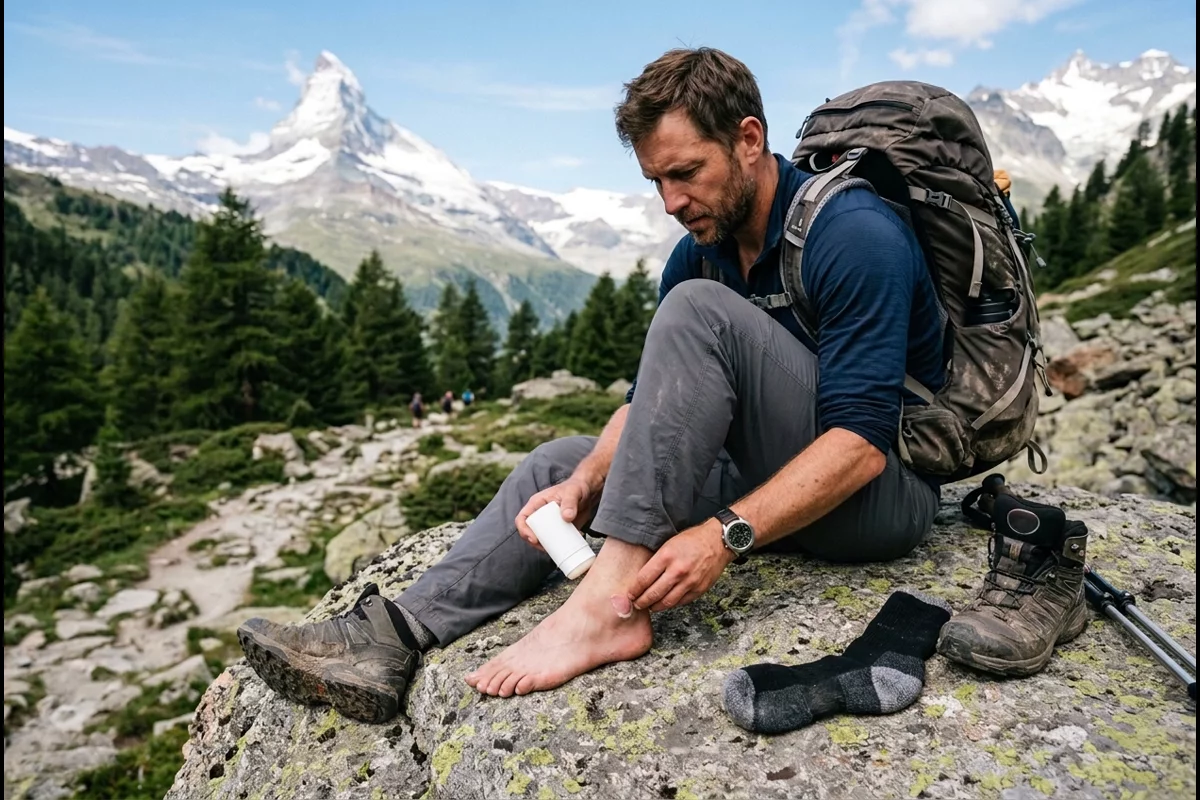
Whether a balm is legally a cosmetic or a drug in the US depends on what it claims to do. The FDA states that “whether a product is a cosmetic or a drug under the law is determined by a product’s intended use”, and some products are both. The federal rules for over-the-counter skin protectants (21 CFR Part 347) list the active ingredients and strengths allowed for that use, and products whose active ingredients are on that list at the stated strengths, such as allantoin (0.5–2%), cocoa butter (50–100%), dimethicone (1–30%), lanolin (12.5–50%), mineral oil (50–100%) or petrolatum (30–100%), may carry a labeling statement about helping to prevent and temporarily protecting chafed, chapped or cracked skin, provided they meet the regulation’s other conditions. So the claims on the label tell you how the product is positioned; they do not tell you it works better than a cosmetic balm.
What a balm does not do: it does not heal skin that is already broken, it does not stop sweat, and it does not last indefinitely, which is why makers tell you to reapply. The same maker’s instructions say to “reapply as needed, especially in hot or humid conditions”.
Takeaway: Think of balm as a friction barrier you renew as the label directs, not a treatment.
Anti-chafe balm, petroleum jelly or powder?
All three reduce rubbing; the right one depends on where the friction is and how much you sweat. Petroleum jelly is explicitly recommended by dermatologists; a stick is, in our view, easier to apply under straps; powder suits areas where you want the skin drier rather than slicker.
| Anti-chafe balm or stick | Petroleum jelly | Powder | |
|---|---|---|---|
| How it reduces rubbing | Thin waxy or oily layer between skin and fabric | Greasy barrier layer | Absorbs moisture and lessens friction |
| What sources say | Makers describe a barrier; ingredients vary by brand | AAD: apply to problem areas such as feet or thighs to prevent chafing | AAD: apply to problem areas; US Army manual (2017 edition, since replaced): use “just enough foot powder since it can harden and become irritating” |
| US label status | Cosmetic or OTC drug, depending on claims and ingredients | Petrolatum 30–100% is a listed OTC skin protectant ingredient | Topical starch 10–98% is a listed OTC skin protectant ingredient, labeled for minor skin irritation |
| Practical notes (our suggestion) | Stick format is easy to apply under straps and on the move | Can transfer to clothing; works well on skin-to-skin areas | Best kept light; reapply on dry skin |
| Evidence of effect on long walks | Not compared in the sources reviewed here | Not compared in the sources reviewed here | Not compared in the sources reviewed here |
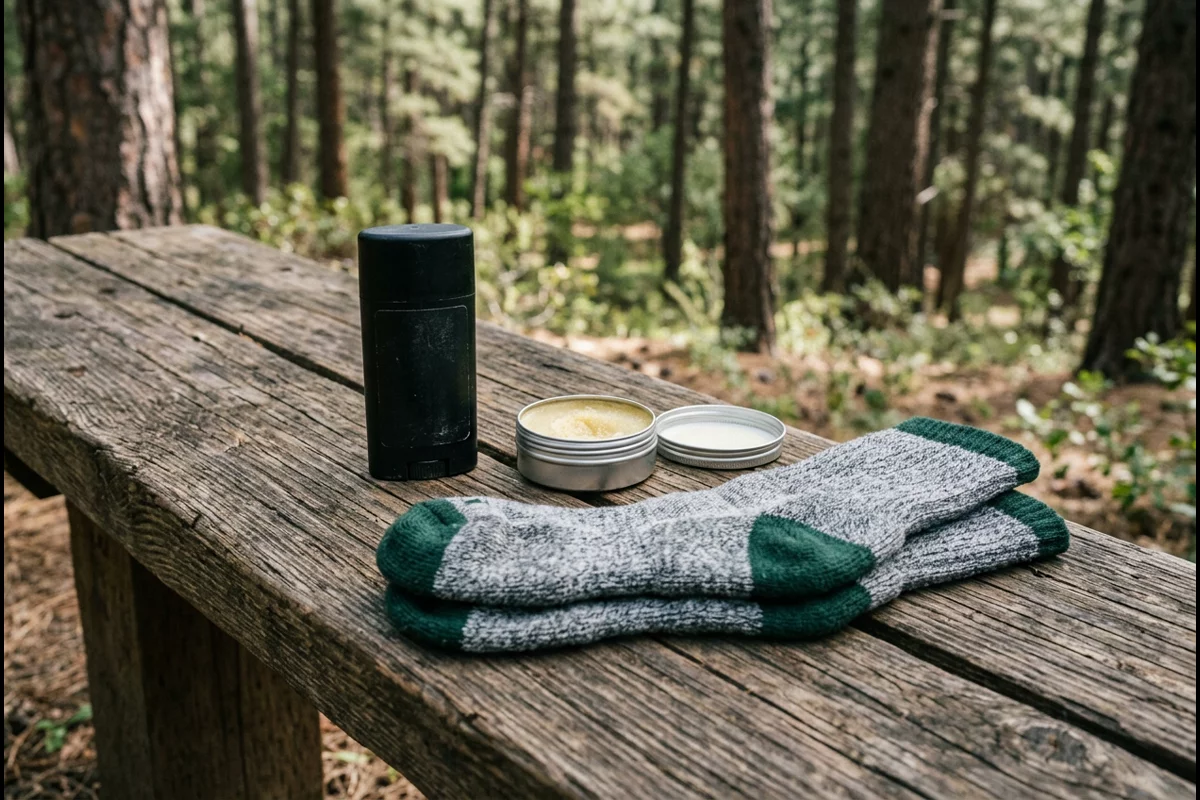
What a balm is made of varies widely. One widely sold stick (Body Glide’s original anti-chafe stick) lists caprylic/capric triglyceride, cetearyl alcohol, ozokerite wax, glyceryl behenate, stearyl alcohol, allantoin and vitamin E, and the maker says it contains no petroleum. One balm tub (StinkBug Organics) lists cocoa butter, lanolin, organic coconut oil, beeswax and vitamin E. These are the makers’ own ingredient lists, checked on October 7, 2026; we have not compared their performance.
Common mistake: Using a balm as a substitute for the right clothing. If cotton shorts are soaked and rubbing, more balm will not keep up; change into dry, moisture-wicking layers.
Takeaway: Use petroleum jelly or balm where skin rubs on skin, a stick under straps, and only a light dusting of powder where you want to stay dry.
How to prevent chafing by body area
Prevent chafing area by area: identify what rubs (skin, a seam, a strap) and what makes it wet, fix the clothing or kit, then add a barrier product. The AAD’s core advice applies everywhere: wear moisture-wicking, loose-fitting clothes during activity, avoid cotton because it soaks up sweat, consider soft bandages such as moleskin on problem areas, and use powder or petroleum jelly where skin rubs.
| Area | Usual cause on a long walk | Prevention to try first | Barrier product |
|---|---|---|---|
| Inner thighs | Skin rubbing on skin, sweat | Moisture-wicking shorts or base layer long enough to cover the area | Balm or petroleum jelly before dressing |
| Underarms | Arm swing against a shirt seam, sweat | Moisture-wicking top with flat seams | Balm or stick |
| Feet and toes | Sock and shoe rubbing, damp socks | Well-fitting shoes and socks, spare dry socks | Light balm or tape on known hot spots |
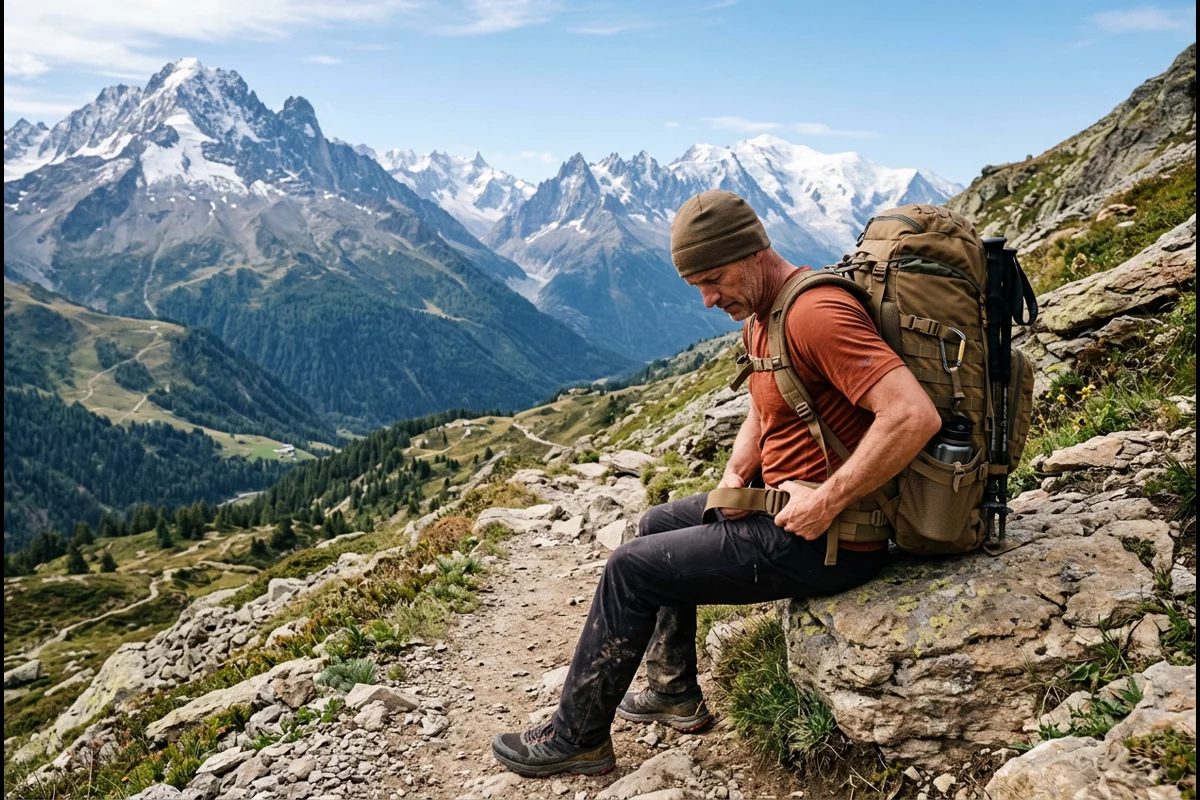
| Waistband and hips | Waistband and pack hip belt sliding with each step | Adjust the hip belt so it holds firm, smooth the shirt under it | Stick balm under the belt line |
| Shoulders and chest | Pack straps, wet shirt fabric | Adjust straps, wear a fitted moisture-wicking layer | Stick balm under straps |
| Skin folds | Trapped moisture, skin on skin | Moisture-wicking fabric in the fold (2023 review) | Powder or balm |
The table combines the AAD’s advice with our own suggestions for walking kit. For feet specifically, sock fit and dryness matter most; see how to choose socks that fit without wrinkles and why damp socks raise blister risk. For pack straps and hip belts, the pack-fit notes in our ruck training guide explain why a hip-belted pack carries load more comfortably.
Takeaway: Fix the rubbing source and the moisture for each area first, then add the barrier product.
How to apply anti-chafe balm and when to reapply
Apply balm to clean, dry, intact skin before you get dressed, cover the whole area that rubs, and reapply as the label directs. If the skin turns red or sore, stop rather than reapply. The steps below are our suggestions, built from one maker’s instructions (apply before activity or getting dressed, reapply as needed, especially in hot or humid conditions) and the AAD’s advice to stop activity if you have pain or discomfort or your skin turns red.
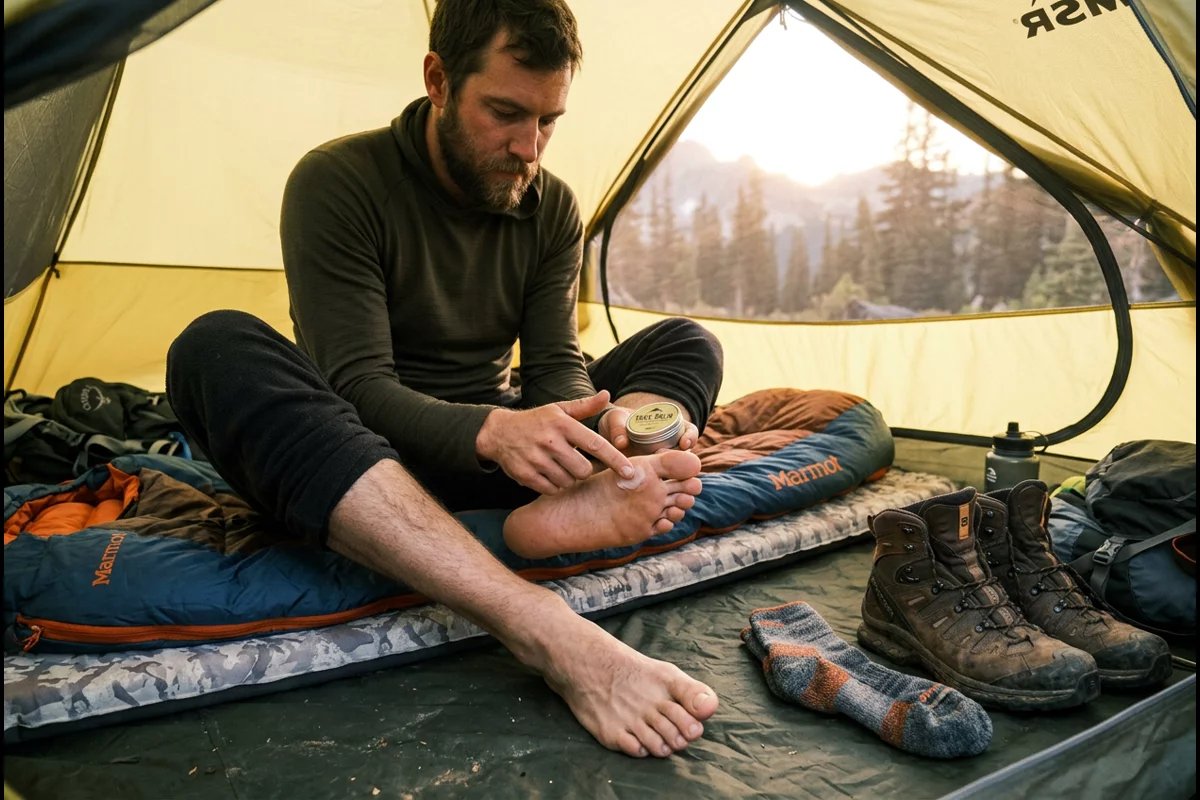
- Before you set off: wash and dry the skin, then apply a thin, even layer that extends a little beyond the area that usually rubs.
- Dress after applying, so the product sits on skin, not on fabric.
- Pack a small stick or tin in a hip-belt or chest pocket so you can reach it without unpacking.
- At stops: check the usual areas. On intact, symptom-free skin, reapply if the product has worn off. If you feel pain or discomfort or see redness, stop the activity, as the AAD advises.
- After heavy sweat, rain or a wash: dry off and reapply as the label directs.
- At the end of the day: wash the product off (one maker says its stick washes off with mild soap) and let the skin dry and rest.
There is no fixed reapplication time that applies to every product and every walker, so follow the product label.
Common mistake: Waiting until the skin stings to apply anything. By then the surface is already irritated and the AAD advice is to stop; apply before you start and reapply as the label directs.
If you have reacted to a skin product before, check the ingredient list first. Reactions to anti-chafing products do happen: a 2023 case report described allergic contact dermatitis caused by adhesives used to prevent chafing in military service. If a product makes your skin itchy, red or rashy, stop using it and ask a pharmacist.
Takeaway: Apply before you dress, carry the product with you, reapply as the label directs, and stop if the skin turns red or sore.
What the research says about chafing products
Research on anti-chafe products is thin: the sources reviewed for this guide include no controlled trials of balms for thigh or underarm chafing on long walks, and studies of lubricants for foot blisters found little or no benefit. The case for using a barrier rests mainly on dermatologists’ advice and the friction mechanism, not on product trials.
| Study | Who | What it found about barriers or lubricants | Limit |
|---|---|---|---|
| Worthing et al., 2017 (systematic review) | 11 controlled studies of running, hiking and marching | Too little high-quality evidence to support barrier strategies for foot blisters; moderate evidence that paper tape may help | Foot blisters, not chafing |
| Scheer et al., 2014 | 50 multi-day ultramarathon runners | Lubricants, powder, antiperspirants, taping and sock choices showed no reduction in blister rates | Small, observational |
| Damoisy et al., 2023 | 533 French trail ultramarathon runners | 79% of those using prevention used anti-friction cream; no method matched the protective effect of shorter distances | Survey of use, not a trial |
| Gerhardt et al., 2008 | 22 adults in a lab | Skin-fabric friction rises with skin moisture | Forearm, hospital fabric |
Our reading: a friction barrier is a reasonable addition that dermatologists recommend, but the sources here do not show how much it helps on a long walk. If you chafe in the same place on every long walk, check the clothing or kit as well as the product.
Takeaway: Use anti-chafe products as one layer of prevention, alongside suitable clothing and kit, and do not expect a guarantee.
When this does not apply
This guide covers preventing chafing on healthy, intact skin. It does not cover, and you should get advice from a pharmacist, doctor or dermatologist for:
- Skin that is already raw, broken or bleeding: do not use this guide; ask a pharmacist how to protect it while it heals.
- Signs of infection: heat, pus or spreading redness around a sore area, or a blister that is very painful or keeps coming back. The NHS advises getting help from NHS 111 (or your local equivalent) in these cases.
- A rash that does not settle, a rash in skin folds, or a reaction to a product.
- Diabetes, poor circulation or reduced feeling in the feet: ask your doctor or podiatrist before using products on your feet.
- Choosing an OTC drug for a medical condition: the US label rules quoted above explain wording, not which product suits you.
Takeaway: If the skin is already damaged, infected or reacting, stop and get professional advice instead of adding more product.
Your anti-chafe checklist for a long walk
Use this checklist when packing for a long walk or a multi-day hike:
- Moisture-wicking, non-cotton layers that do not bunch where you chafe.
- Shorts or a base layer that cover the inner thighs if they rub.
- Pack straps and hip belt adjusted on a practice walk with the same load.
- Balm or petroleum jelly applied to known areas before dressing.
- A small stick or tin within reach, plus tape or moleskin for feet.
- Dry spare socks and, on multi-day walks, a dry base layer for camp.
- A plan to check skin at every stop and to stop if it turns red or hurts.
For the rest of your preparation, choose socks and spare pairs by walk length and weather, and if you are training with a loaded pack, follow a gradual loaded-walk plan with foot checks. More articles are collected under personal care and foot care.
Takeaway: Pack the right clothing, the barrier product and a plan to check your skin, and test all three on a practice walk.
How this guide was put together
We compiled this guide on October 7, 2026 from the American Academy of Dermatology’s blister and petroleum jelly pages, the NHS blisters page, the FDA’s guidance on cosmetics and drugs, the US federal skin protectant regulation (21 CFR Part 347), Appendix E of the US Army’s 2017 foot-march manual (since replaced by later editions we could not retrieve), two makers’ product pages for their ingredient lists, product descriptions and usage instructions (attributed to the maker), and the abstracts of the studies listed in the sources. The area table and application steps combine those sources with our own planning suggestions, labelled as such. We did not test products or receive them from makers, and we do not rank brands. This is an independent information site; see about the site for who runs it.
Related reading:
- Best socks for long distance walking — Choose sock fit, fiber and spares to keep feet dry.
- Ruck march training plan — Build up loaded walks gradually and check your feet each time.
Takeaway: The facts here come from named public sources; planning advice is labelled as ours and is not based on product testing.