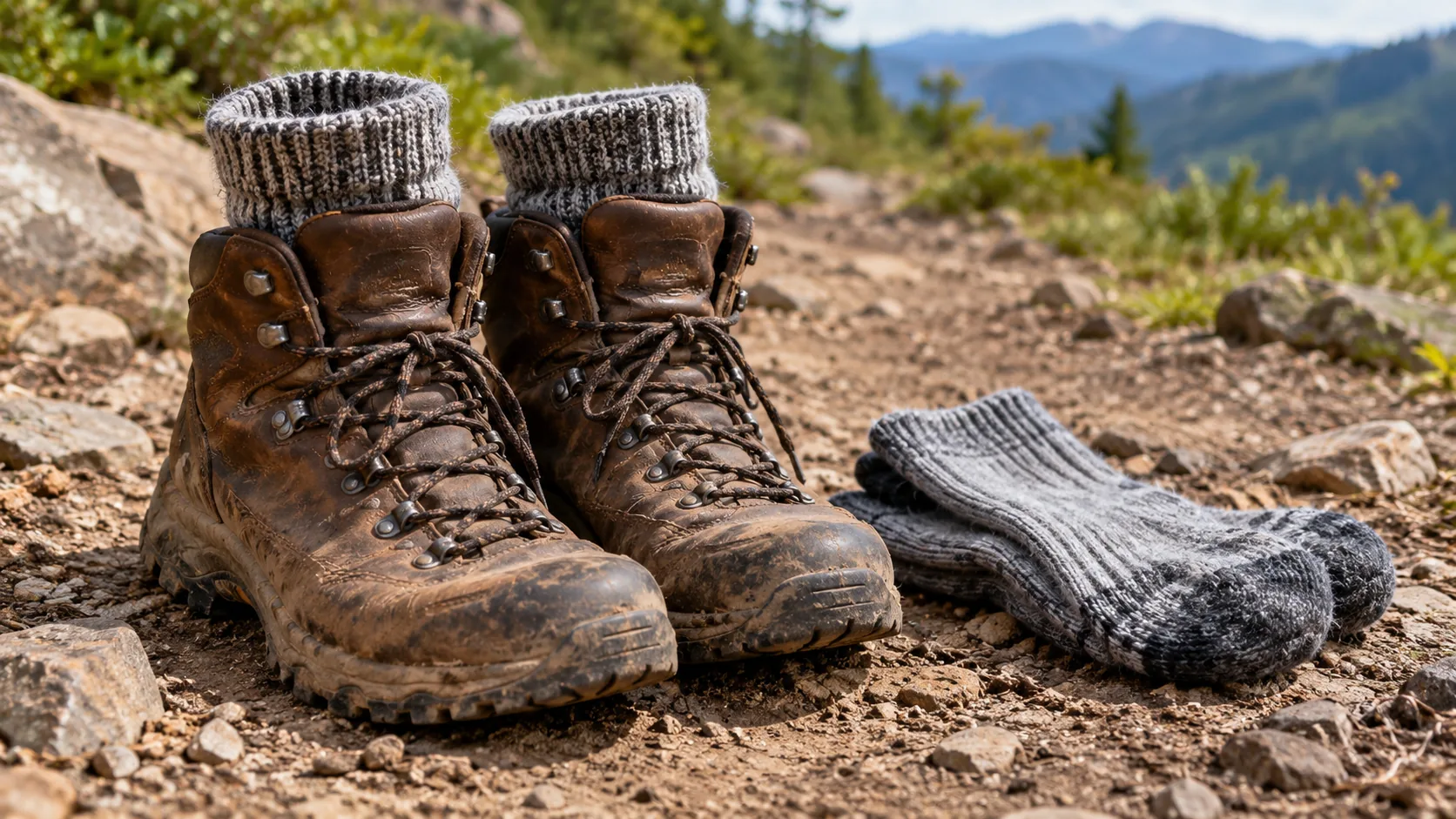
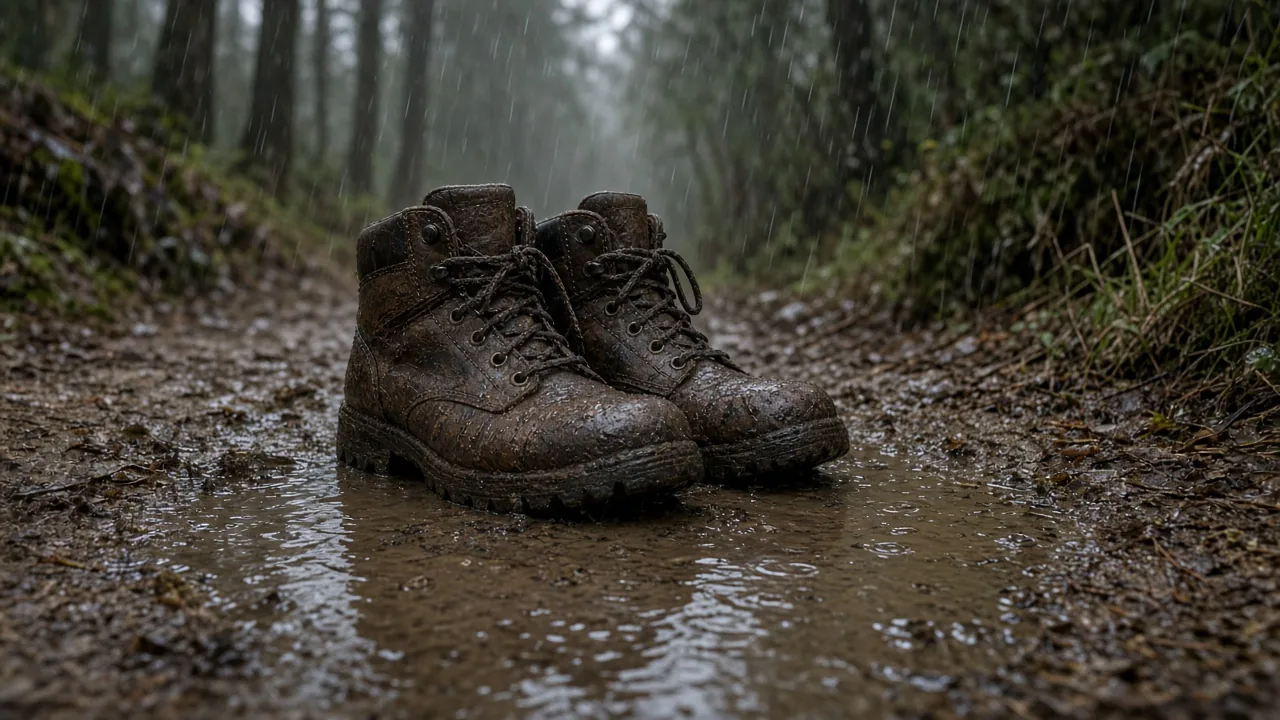
A foot care kit fails when you use it to keep walking on a foot that already hurts. Pack dry spare socks, a clean cloth, and a simple plaster or padded dressing, and keep them for washing, a dry change, and a cover while the skin is still comfortable enough to walk.
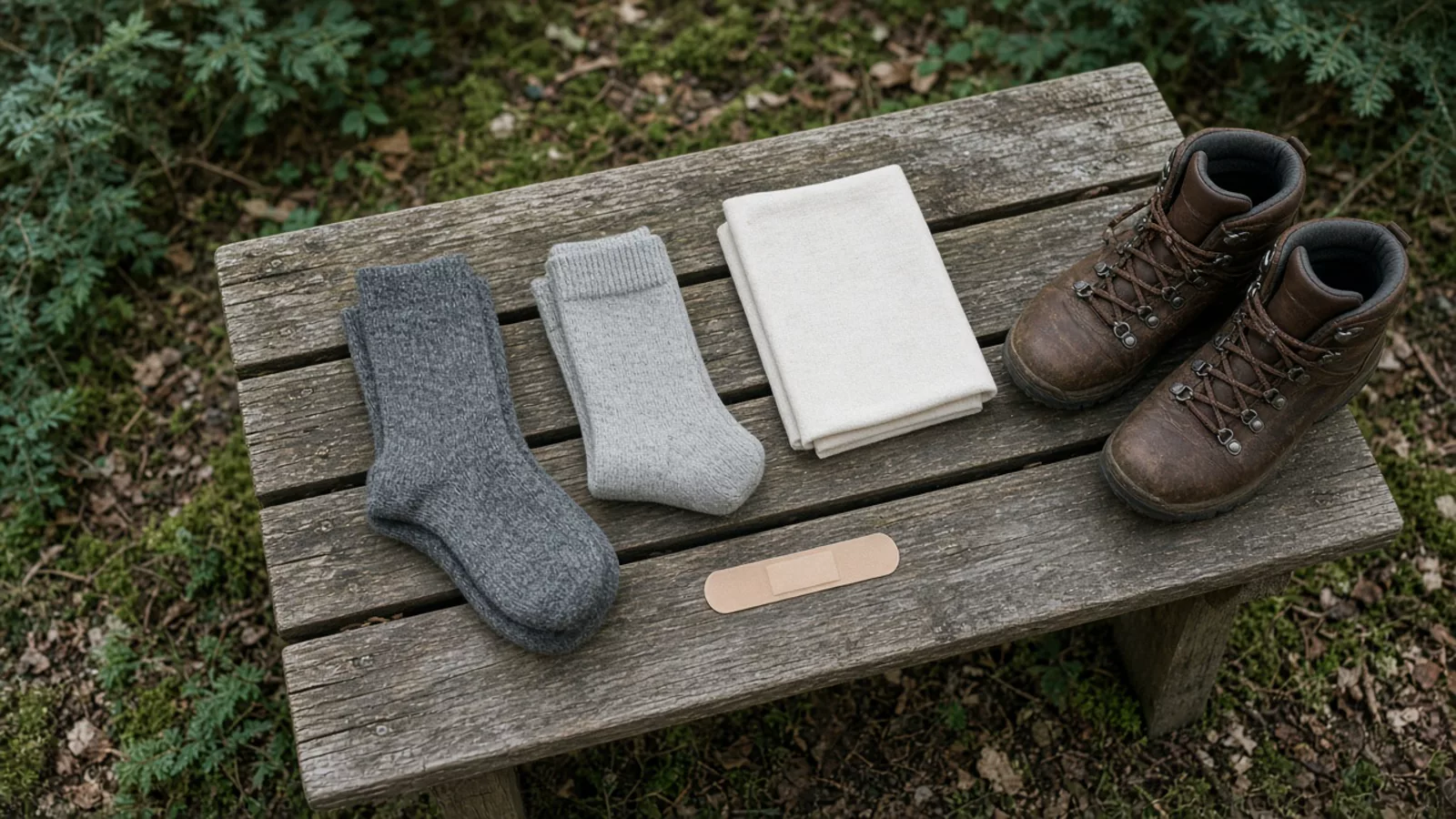
A foot care kit for hiking is dry spare socks, a clean cloth, and a simple cover. The NHS says to keep a blister clean, gently wash the skin, pat it dry, and cover it with a soft plaster or padded dressing, and to change thick moisture-wicking socks when your feet sweat. The American Academy of Dermatology says to wear nylon or moisture-wicking socks, keep shoes from being too tight or too loose, and stop if you feel pain or discomfort or your skin turns red. Berkshire Healthcare says to wash feet daily in warm soapy water, dry between the toes, and check them every day. How many of each item you carry follows the route, resupply, weather, and the person. Andrew Skurka publishes a detailed personal kit and a team kit. The rows below are the cleaning, sock, and cover check.
What goes in a foot care kit for hiking
Carry items for washing, a dry sock change, and a cover. People who ask what should be in a first aid kit for hiking often want a wider medical kit. This page answers the foot part of that question: cleaning, spare socks, and basic protection. You still need first-aid training, and any personal medical plan, for problems this list does not cover. A backpacking foot care kit uses these same rows, then the multi-day recheck further down, because you repeat the wash and the dry spare.
Reading a tape trial, and ranking tape brands, is a different task. The cover in this table is a soft plaster, a padded dressing, or the soft bandage the American Academy of Dermatology describes for problem areas.
| Item | Purpose | Hygiene precondition | Limit |
|---|---|---|---|
| Dry spare socks | Replace socks damp from sweat. The NHS suggests thick socks during exercise, such as moisture-wicking sports socks, and frequent changes if your feet sweat. The Academy suggests nylon or moisture-wicking socks. Berkshire Healthcare says to wear well-fitting socks and change them every day. | The spare is dry, and you have not used it to wipe a blister. | Fit and fiber are covered in the long-distance walking socks guide. If one pair on your feet does not help, the Academy says to try two pairs. That is a way of wearing socks, separate from how many dry spares you pack. The number you pack follows the route, resupply, weather, and the person. |
| Clean cloth | Pat the skin dry. The NHS says to gently wash the skin and pat it dry. Berkshire Healthcare says to dry the feet well, especially between the toes, to help prevent fungal infections such as athlete’s foot. | The cloth is clean and dry before it touches skin. Wash your hands before you touch a burst blister. | The sources describe the drying step. They do not name a cloth. If this cloth has wiped fluid from a blister, wash it before it touches intact skin, in line with the NHS instruction to keep the blister as clean as possible. |
| Soft plaster, padded dressing, or loose bandage | Cover a blister. The NHS says to use a soft plaster or padded dressing. A pharmacist can recommend one. The NHS says a hydrocolloid dressing, a moist dressing, can protect the blister, help reduce pain, and speed up healing. The Academy says to loosely cover a blister with a bandage, with the sides brought in so the middle sits a little raised. On a pressure area such as the sole, the Academy says to cut padding into a donut with a hole in the middle, place it around the blister, and cover both with a bandage. On intact problem areas, the Academy suggests adhesive moleskin or another soft bandage, applied securely. | Wash your hands before you touch a burst blister. If the blister has already burst, the NHS says to let the fluid drain before you cover it. Leave the remaining skin in place. The NHS says to avoid peeling it off or picking at the edges. The Academy says to leave the roof of the blister in place. | The cover protects skin you are still able to walk on comfortably. The NHS says do not burst a blister yourself. A GP might burst a large or painful blister with a sterilised needle. This kit includes no needle, and this page does not set out that step. |
| Soap for a daily foot wash | Berkshire Healthcare says to wash your feet every day in warm, soapy water. | In Olympic National Park wilderness, the National Park Service says to wash at least 200 feet from any campsite or water source, to use a minimal amount of soap, and to empty soapy water at least 200 feet from any lake or stream. The page, last updated 9 March 2017, says never to put any soap in streams or lakes, and that biodegradable soap breaks down slowly or not at all in cold water. On other land, follow that land manager’s rule. | Soap is usable when the wash water stays out of lakes and streams. The 200-foot distances are the Olympic wilderness rule in that 2017 page. |
| Moisturiser or urea-based emollient | Berkshire Healthcare’s personal footcare kit names a moisturiser or urea-based emollient. For dry skin, put moisturiser on regularly before bed. If hard skin hurts, Berkshire Healthcare says a daily cream containing urea at 10 to 25 percent can help reduce it. If hard skin causes no pain, the same page says to leave it, because it is protecting the foot. | Use it on intact skin, and keep it off the skin between the toes. Berkshire Healthcare says moisturiser between the toes can lead to fungal infections. | This is care for dry or hard skin at rest. The 10 to 25 percent range is Berkshire Healthcare’s figure for a urea cream on hard skin. |
| Petroleum jelly or powder | The Academy says to apply powder or petroleum jelly to problem areas so skin rubs less on skin or on clothing. | Put it on intact skin before you dress. The anti-chafe balm guide compares jelly, powder, and balm. | Stop if you feel pain or discomfort, or if the skin turns red. This page names no brand and no amount. |
Takeaway: Use a row only when its hygiene column is true, and stop when its limit column says the item has nothing left to do.
When a sock, cloth, or cover is usable
A spare sock is usable when it is dry. A cloth is usable when it is clean. A cover is usable when the pad is clean and, if the packet prints a date, that date is still current. Soap is usable when you can wash away from lakes and streams and keep the soapy water out of them.
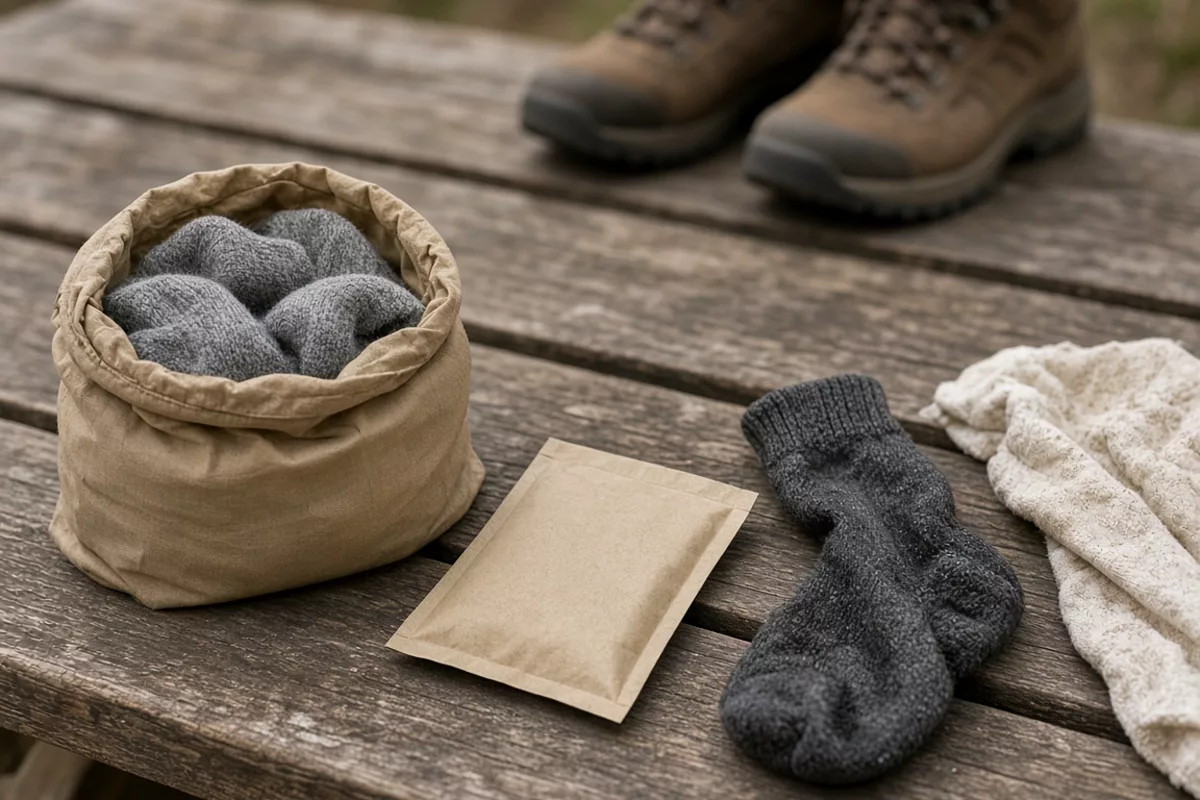
Follow a date printed on a dressing packet. This page assigns no shelf life of its own. These sources also do not describe a way to dry socks on the trail, so a damp pair waits until it is dry and clean. Sock changes for long walks are planned on the socks guide. This page checks a later point: whether the spare you already packed is still dry.
Takeaway: If the sock is damp, the cloth is dirty, or the cover is gritty, that item is out of use until you replace it or clean it.
Recheck the kit for one day and for several days
On a single day, recheck before you leave and again when you take the boots off at a rest. On a walk of several days, recheck each evening and again before the boots go back on. The number of spares that makes those mornings possible follows the route, resupply, weather, and the person.
One-day recheck
| Check | Usable | Sort it before you continue |
|---|---|---|
| Spare socks | Dry, and kept apart from the pair on your feet | They are damp, so they are not a spare until they are dry |
| Cloth | Clean and dry | It is wet, muddy, or has already wiped a blister |
| Cover | Packet intact, or the pad is clean | It is dirty, wet, or stuck to grit, or a printed date on the packet has passed |
| Skin | Comfortable, with no new red patch | You feel pain or discomfort, or the skin is red. The Academy says to stop the activity |
| Shoes | They fit. The NHS says to wear comfortable, well-fitting shoes, and to wear new shoes for short periods until they are comfortable | These shoes caused a blister. The NHS says to leave them off until it heals |
Multi-day recheck
For the evening wash itself, follow the camp foot-washing routine to choose a permitted wash spot, dry between the toes, and keep used supplies apart.
| When | What you check |
|---|---|
| Each evening | Wash your feet in warm soapy water if you can keep that water out of lakes and streams, then dry between the toes. Berkshire Healthcare asks for that wash and that drying. In Olympic National Park wilderness, use the 200-foot distances on the National Park Service page. |
| Each evening | Look over both feet. Berkshire Healthcare says a daily check helps you spot problems quickly. |
| Each evening | Set damp socks apart from the dry spare. Berkshire Healthcare says to change socks every day, and the NHS says to change them frequently if your feet sweat. Put a pair back on only once it is dry and clean. |
| At night, if the skin is intact | Moisturiser on dry skin, kept off the skin between the toes, as Berkshire Healthcare describes for dry skin before bed. |
| Next morning | The cloth and the cover still meet the usable test. If a blister appeared yesterday, the shoes that caused it stay off until it heals. |
Takeaway: The evening reset gives you a clean cloth, a dry spare, and a look at the skin. The shoes that rubbed a blister stay off until it heals.
When the kit means you stop and ask for help
Stop when the skin hurts, feels uncomfortable, or turns red. The American Academy of Dermatology says to stop the activity immediately then, because carrying on can lead to a blister. If a blister is already there, the Academy says most heal on their own in one to two weeks, and to wait until it has healed before you go back to the activity that caused it. The NHS says blisters often heal on their own within a week. It also says to leave off the shoes or the equipment that caused the blister until it heals.
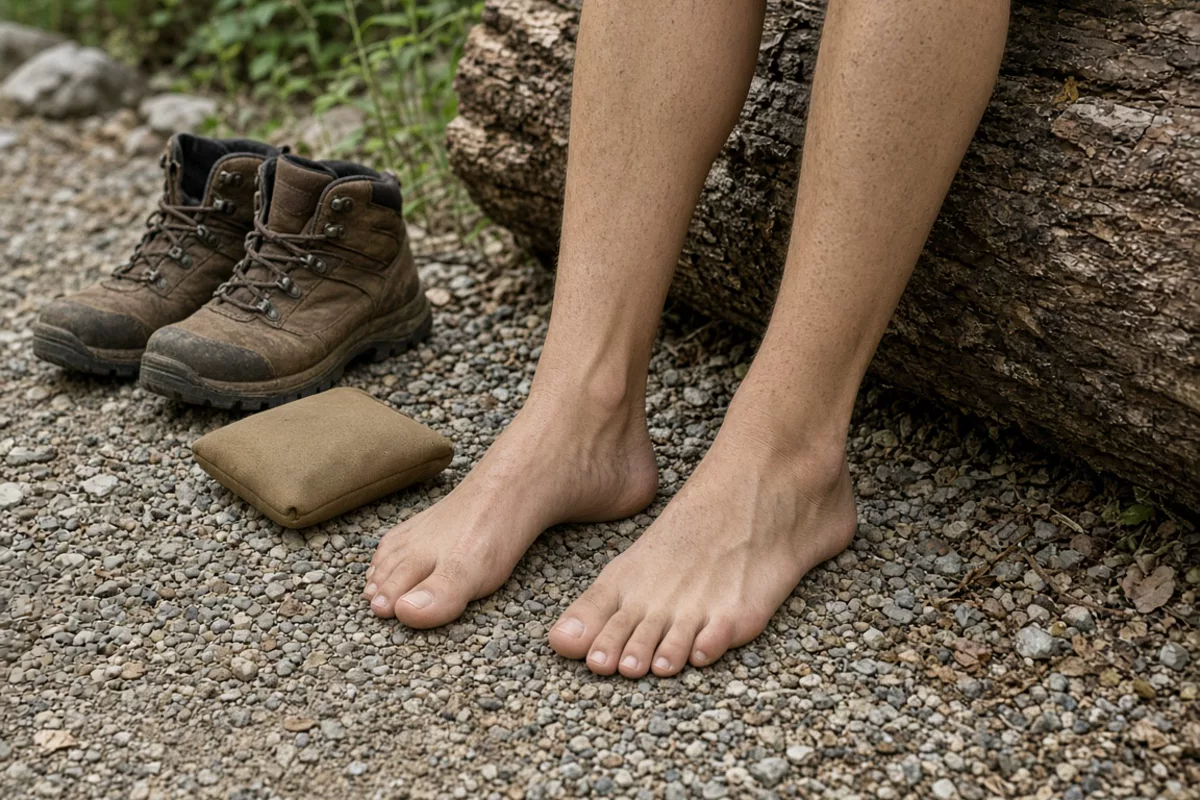
The cover and the spare socks have finished their job, and the next step is help, in the situations these pages name:
- A blister is very painful or keeps coming back. The NHS says to get help from NHS 111.
- The skin looks infected. The NHS describes a blister that is hot and filled with green or yellow pus. The surrounding skin may look red, which can be harder to see on brown or black skin. The Academy names redness, pus, or increased pain or swelling, and says to see a doctor or a board-certified dermatologist.
- A blister is in an unusual place, such as the eyelids, mouth, or genitals, or several blisters have appeared for no reason. The NHS sends those to NHS 111 as well.
- A burn, a scald, sunburn, or an allergic reaction caused the blister. The NHS includes those in the same help list.
- You have an open wound on the foot, a red, hot, swollen area, or an ingrown toenail with a bacterial infection. Berkshire Healthcare says you can self-refer to NHS podiatry for those.
- The NHS says not to ignore an infected blister. Without treatment it could lead to a skin or blood infection.
A GP might burst a large or painful blister with a sterilised needle, and might prescribe antibiotics if the blister is infected. Both of those stay with the GP. A general care list does not replace first-aid training or a personal medical plan.
If you have diabetes, Berkshire Healthcare says toenail care matters especially, about every 3 to 4 weeks, and tells readers with an open wound, a red hot swollen area, or an infected ingrown toenail to seek podiatry. This checklist is the packing list above. A clinician’s plan for diabetes is a separate document.
Training days have their own foot checks before, during, and after a loaded walk. Those checks belong to the training plan. They do not stretch this kit into a reason to finish a painful day.
Takeaway: Pain, red skin, or signs of infection end the useful range of the socks, the cloth, and the cover.
Related reading:
- Long-distance walking socks for fit, fiber, and how you plan sock changes.
- Anti-chafe balm for petroleum jelly, powder, and balm on intact skin.
- Ruck march training for building distance and for foot checks in training.
- All field guides and the foot care category.
How this checklist was put together
We read four public pages from copies saved on 11 October 2026, and used them again on 12 October 2026: the NHS blisters page (last reviewed 22 November 2023, next review due 22 November 2026), the American Academy of Dermatology page on preventing and treating blisters, Berkshire Healthcare NHS Foundation Trust’s page “Caring for your feet”, and the National Park Service wilderness sanitation page for Olympic National Park (last updated 9 March 2017). Health statements above come from those pages, under the conditions they state. The cloth, the split between clean and used items, and the one-day and multi-day tables are packing checks built from those instructions. We assigned no kit weight, no price, and no count of items for a route this page has not seen.