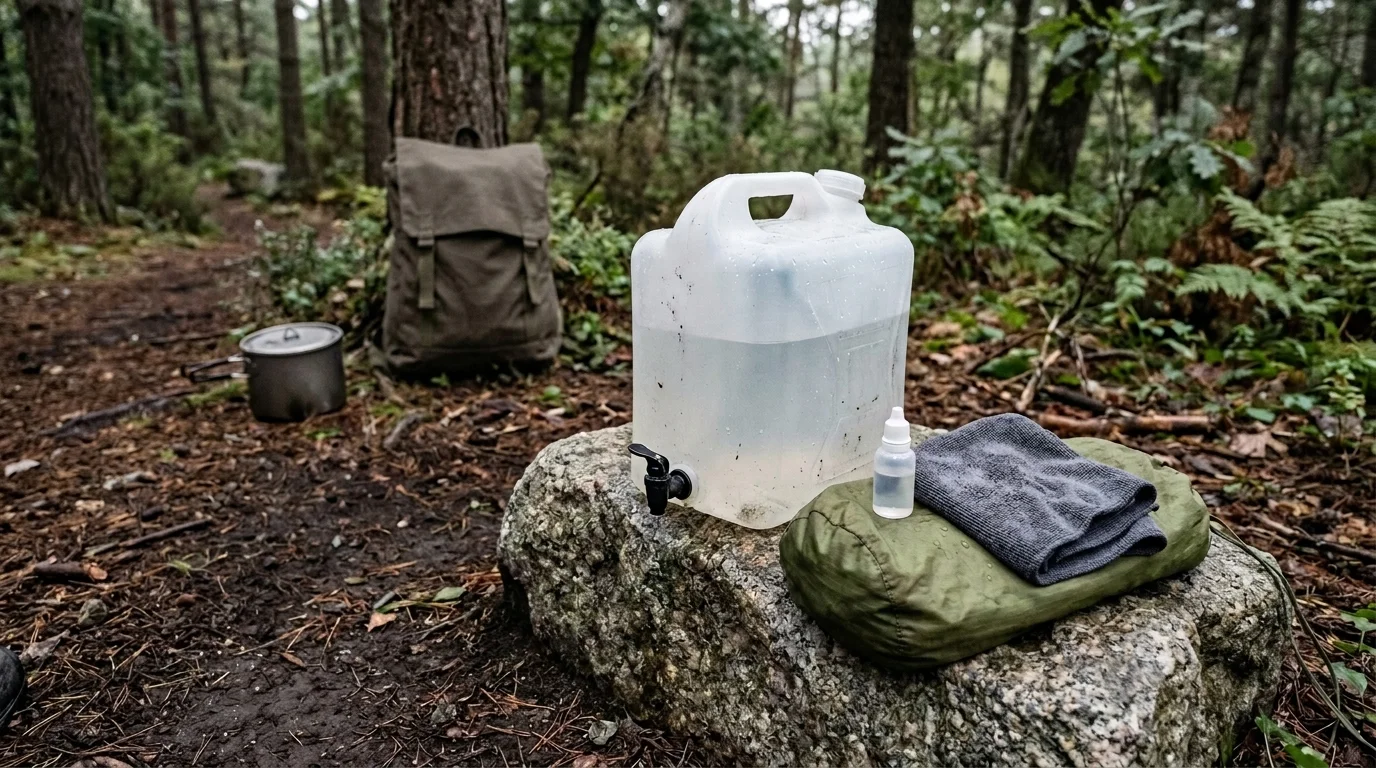
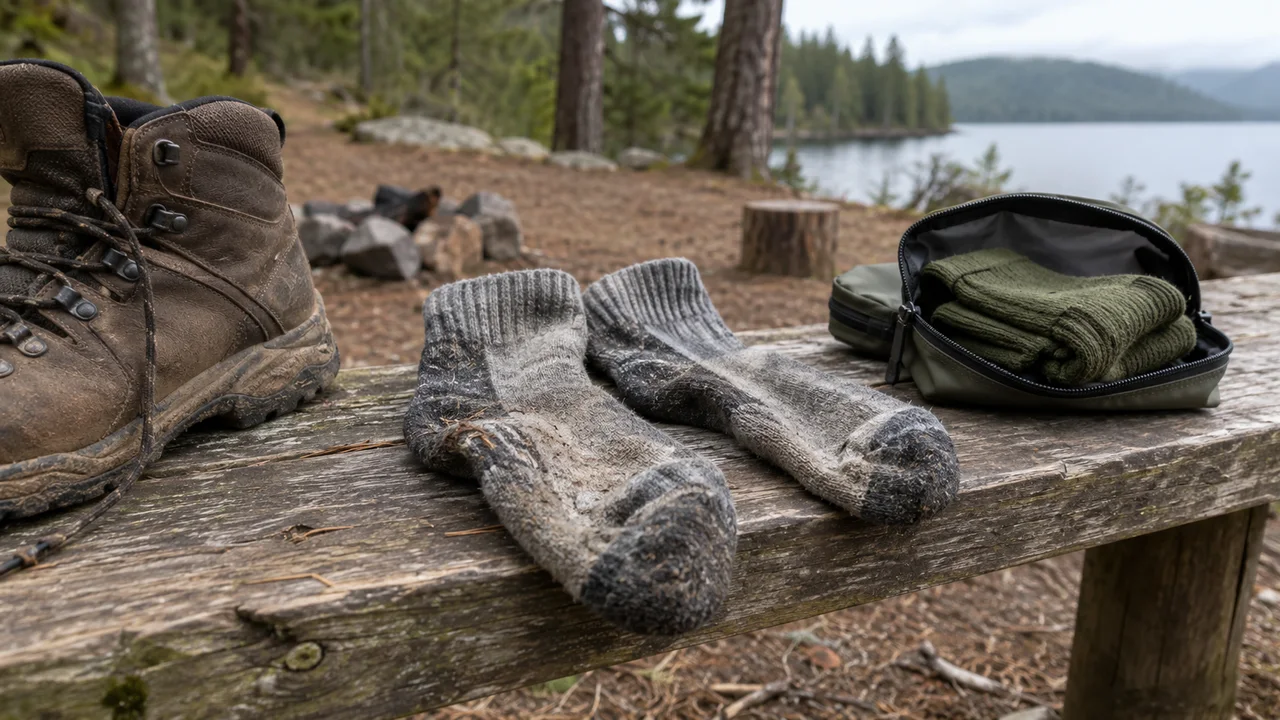
Grit left on your feet goes back inside your socks when you dress for the next walk. To wash feet when camping, choose a permitted washing spot, gently clean with warm soapy water, dry carefully between the toes, and put on clean socks. Decide where the used water will go before you start.
This routine is for everyday cleaning of intact skin after a walk. Open wounds, a painful or inflamed foot, or a personal foot-care plan need a different decision; see when to get advice below.
Choose the washing spot before taking your boots off
Check campsite notices or ask the ranger or host where body washing and wastewater disposal are allowed. A drinking-water tap does not, by itself, tell you where to empty a foot basin. Set up only after you know the answer.
| What the camp has | Your next step | Check before starting |
|---|---|---|
| A designated shower or washing facility | Use the facility according to its posted rules. | Bring your own towel and footwear for shared showers. |
| Water and permission for a basin wash | Carry the water to the permitted washing area. | Find the approved wastewater destination; lay out a towel and clean socks. |
| Limited water or weather too cold for a wash | Consider the wipe fallback below and arrange a proper wash when available. | Keep essential water needs covered and have a way to pack used wipes out. |
| Unclear washing or disposal rules | Ask the land manager before using soap outdoors. | The right disposal method depends on the place. |
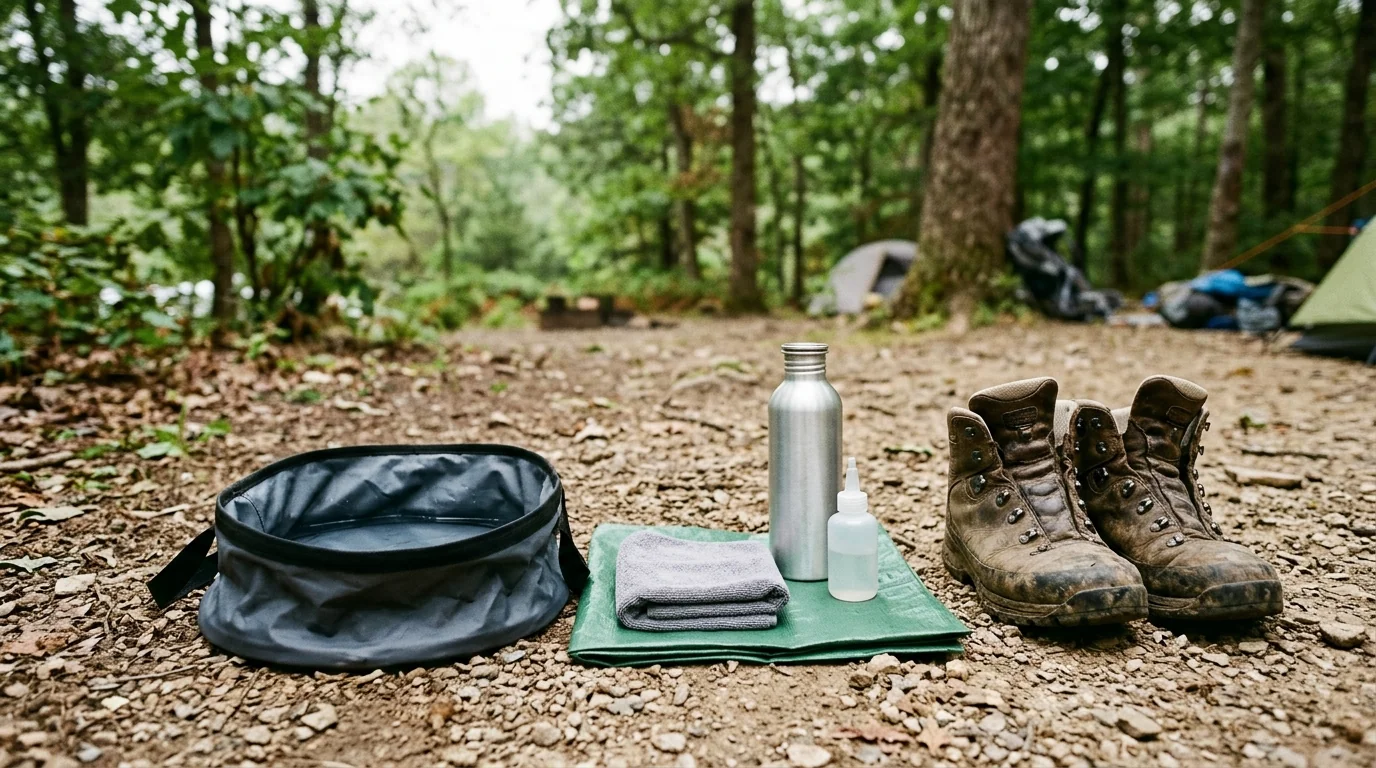
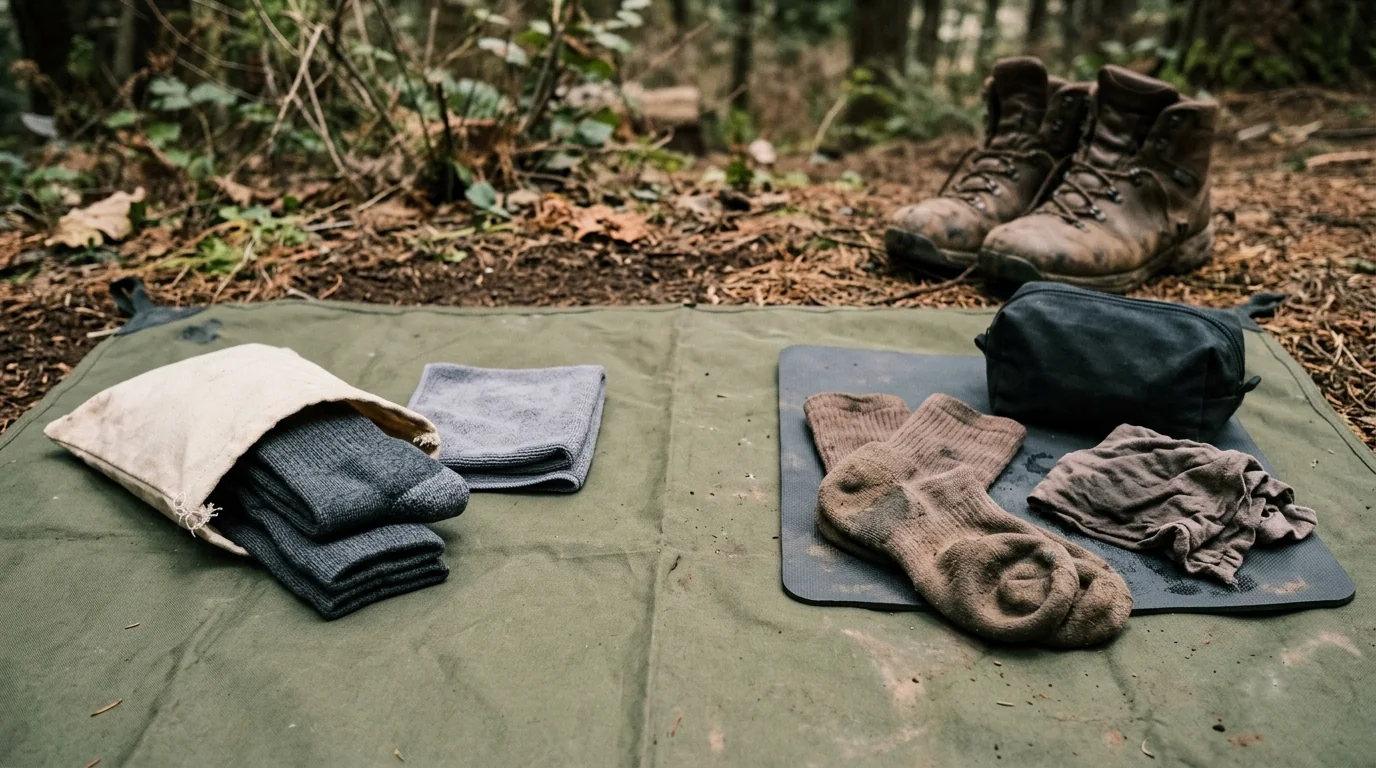
For a basin wash, put the clean towel and socks within reach on a clean surface. Put the worn socks elsewhere. The hiking foot-care kit checklist helps you check the supplies before leaving home.
Wash, dry, then change socks
Berkshire Healthcare’s general foot-care advice recommends a daily wash in warm soapy water, thorough drying and a daily sock change. At camp, use this sequence to organise those actions:
- Remove boots and worn socks. Look over both feet, including the soles and toe spaces. Pause if you find broken skin or a painful area.
- Gently clean the skin. Use the warm soapy water to remove surface dirt, then rinse away the soap. Avoid digging under nails or scraping at stubborn patches. A long soak is not required for this routine.
- Dry before dressing. Use a clean towel and take time over each toe space. Dabbing is the drying method described on the NHS athlete’s-foot page; do not force a rough towel between the toes.
- Put on a clean pair of socks. Keep your dried feet on the clean surface while reaching for them, rather than stepping back into dirt.
- Deal with the basin and used items. Use the disposal route you checked before washing, then keep used cloths apart from supplies intended for the next wash. Before touching a burst blister or moving on to camp cooking, follow the backpacking handwashing guide to wash your hands with soap and clean water away from streams and lakes.
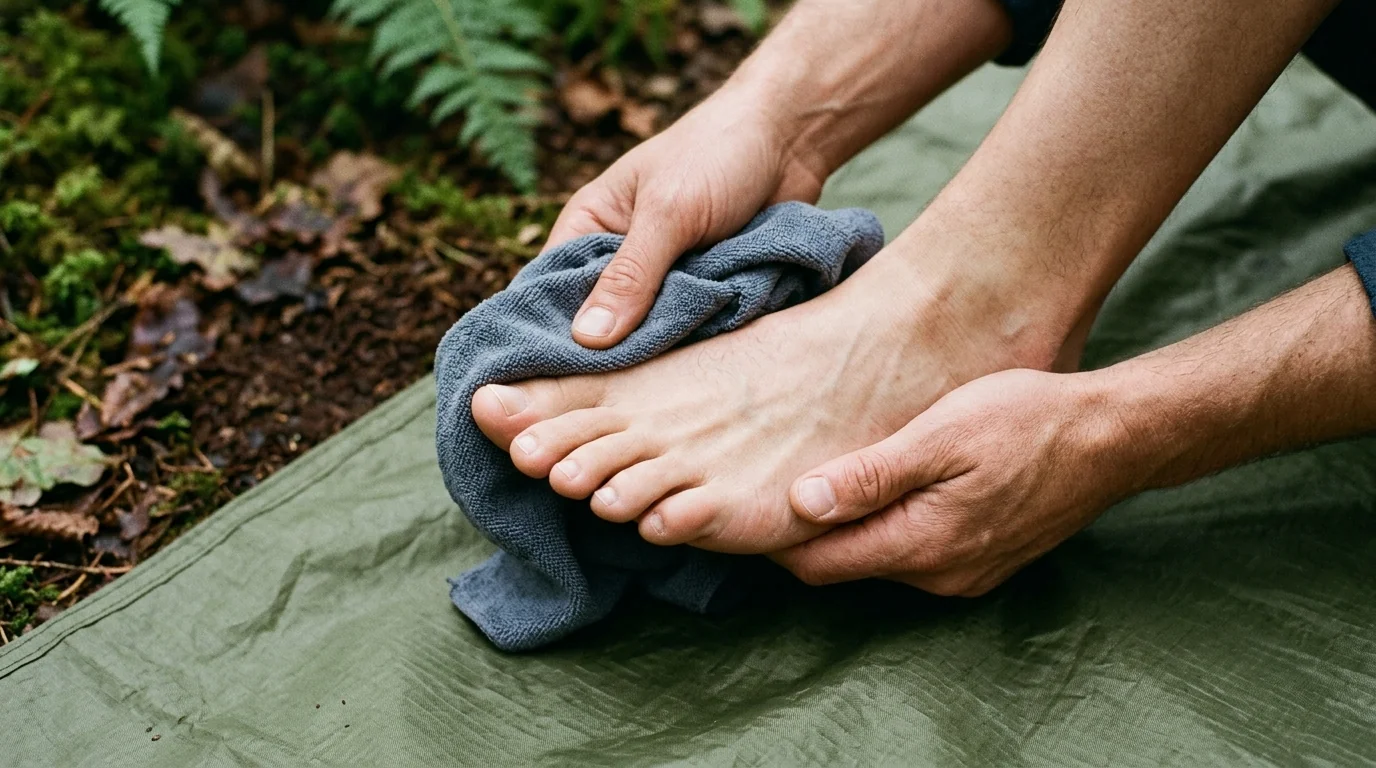
A foot can look dry on top while the toe spaces still need attention. Check them before putting the socks on. The NHS drying advice comes from its athlete’s-foot guidance; cleaning and drying do not establish a diagnosis or replace treatment.
Keep clean supplies separate from used ones
Give the dry spare socks and fresh towel their own pouch or clean space. Use a different place for the worn socks and used cloth. This is a packing arrangement for the routine, rather than a tested disinfection method.
The NHS athlete’s-foot guidance advises using a separate foot towel, washing it regularly, and not sharing towels, socks or shoes. Plan enough clean supplies for your route and access to laundry. A used cloth is not ready for another clean wash simply because it has dried.
This page stops at the sock change. For fit and spare-pair planning, use the long-distance walking socks guide. Washing a pair and getting it dry for tomorrow is a separate task.
Dispose of wash water under the local rules
Keep soap out of lakes and streams, including soap labelled biodegradable. Olympic National Park’s wilderness sanitation page explains that biodegradable soap can break down slowly, or not at all, in cold water.
That park’s published instructions require body washing at least 200 feet from any campsite or water source, minimal soap, and disposal of soapy water at least 200 feet from a lake or stream. These are Olympic wilderness instructions, last updated on 9 March 2017. Check the current rules for your destination; do not apply that distance as universal permission to discharge water anywhere outdoors.
At a serviced campground, use the disposal point the operator specifies. Do not assume a toilet is suitable: Olympic’s page allows only human waste and toilet paper in its wilderness toilets.
For a cold or water-limited stop, the National Park Service’s general camping hygiene article suggests wipes as a bathing alternative. Pack used wipes out, including those labelled biodegradable. North Cascades National Park explicitly includes wet wipes among the hygiene products to carry out. Keep the drying and clean-sock steps. This fallback has no claimed sanitising effect or equivalence to a full wash, and these sources provide no minimum water volume for washing feet.
When a camp wash is not enough
An open wound or a red, hot or swollen foot needs advice from a clinician or podiatrist. If you have diabetes, reduced sensation, poor circulation or a weakened immune system, follow your personal foot-care plan and seek advice about new problems rather than assuming this camp routine is suitable.
For a blister, the NHS advises gentle washing, patting dry and keeping it protected; do not burst it yourself. Seek medical advice for a very painful blister or signs of infection such as hot skin or coloured pus. Repeated washing is not a reason to keep walking on a worsening foot.
Method and sources
This guide combines public foot-care advice with campsite hygiene guidance, read on 15 October 2026. The order of actions and facility checklist are editorial organisation of that advice. No equipment, wipe or water-saving method was field-tested for this article. There is no specified wash duration, water allowance or promise of preventing infection. The linked references below let you check the health guidance and the scope of the park rules.