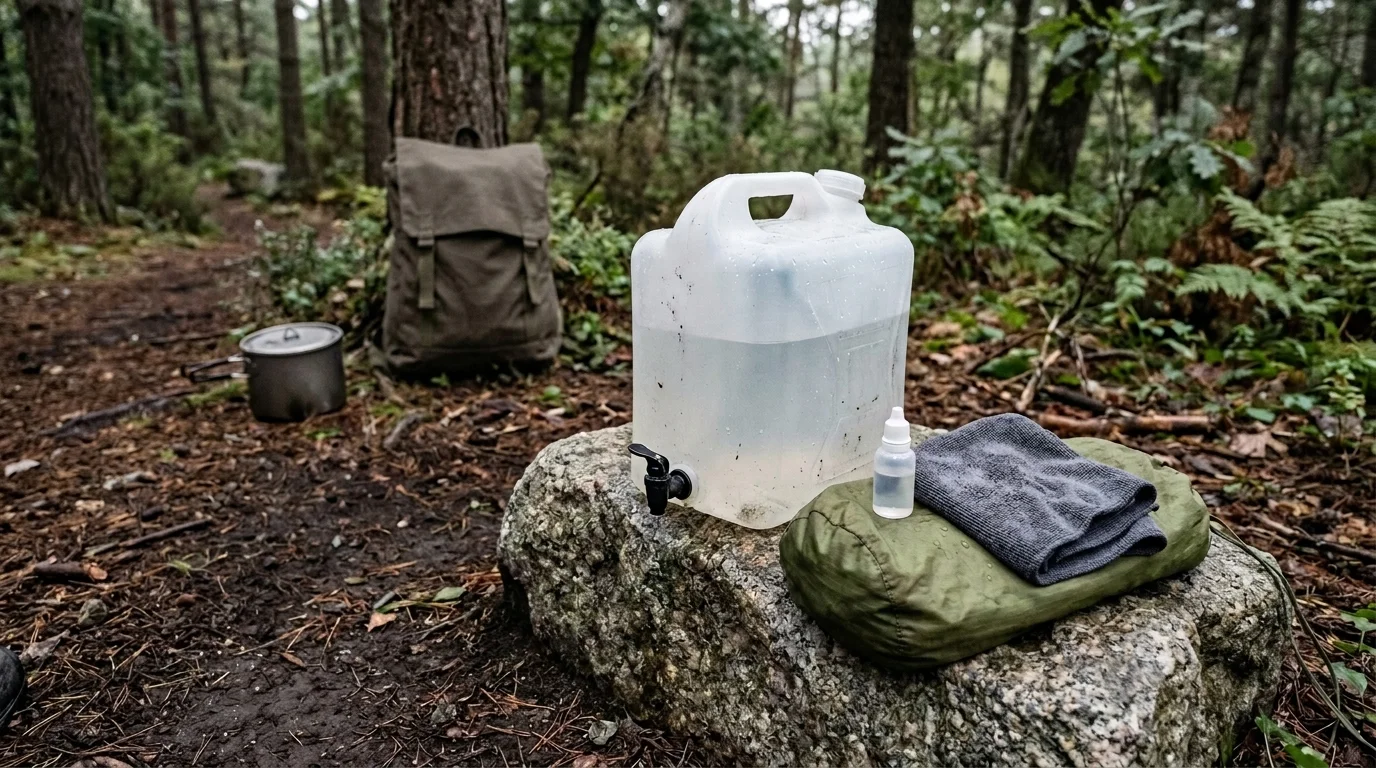
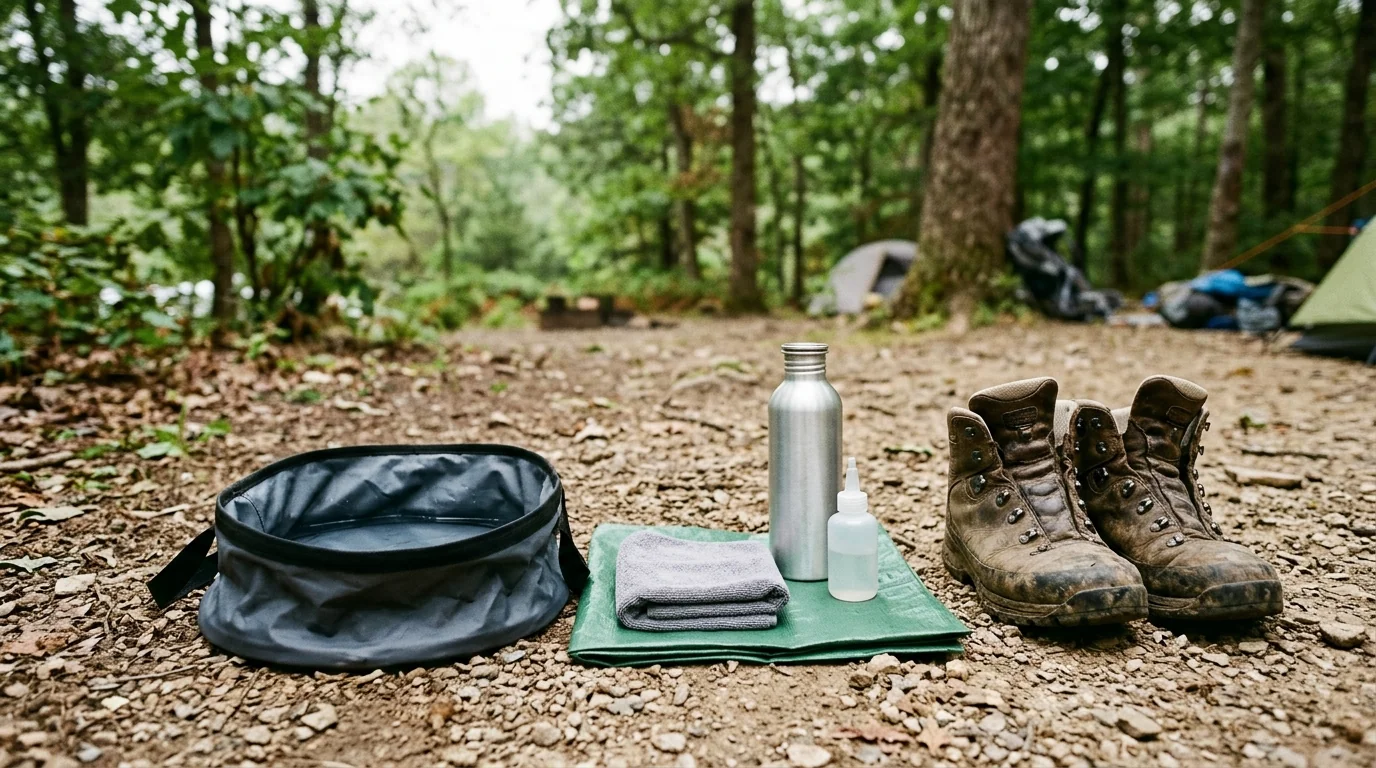
Yesterday’s clammy socks can leave you starting a walk already uncomfortable. Plan a clean, dry pair for each day, and wash and dry the used pairs before they return to the rotation.
Reusing socks for multiple days needs a distinction: wearing the same pair again after washing is different from repeatedly wearing it unwashed. Brand advice about fewer washes addresses garment care; it does not establish how many days of unwashed wear are healthy. The table and camp checklist below help when spare pairs are limited or laundry has not dried overnight.
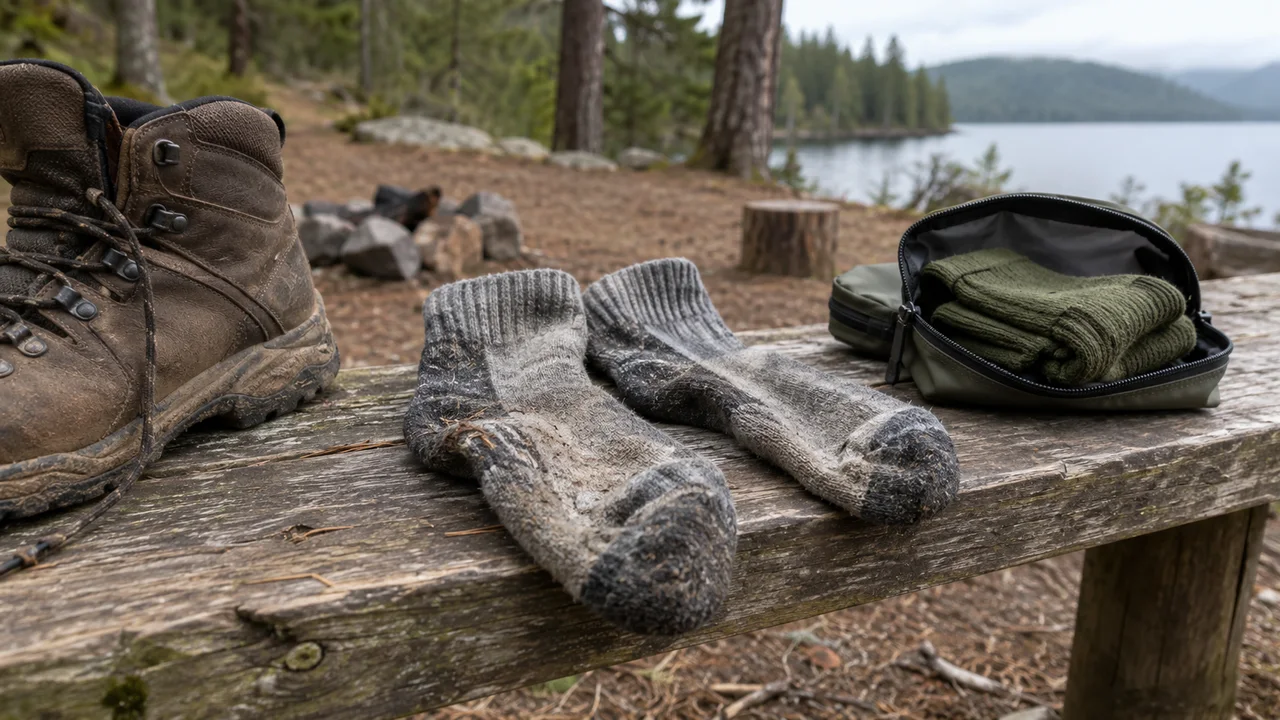
Why do sock-care and foot-hygiene advice sound different?
They answer different questions. Berkshire Healthcare’s general foot-care guidance recommends changing well-fitting socks daily, washing feet each day and drying carefully between the toes. That is the daily hygiene baseline used here.
| Brand garment-care advice | Health and hygiene guidance | What your current pair means for the decision |
|---|---|---|
| Darn Tough’s April 2026 care article allows repeat wear when its socks are neither visibly dirty nor sweat-soaked. | Berkshire Healthcare recommends a daily sock change. | A less frequent laundry recommendation does not turn a worn pair into a clean daily change. |
| The brand describes airing and rotating pairs. | The NHS athlete’s-foot page advises clean socks daily and drying between toes. | Airing a worn pair and washing it are separate steps; mark which has actually happened. |
| The brand gives care instructions for its socks. | Neither health page gives a safe number of unwashed hiking days. | Use the care label for washing; do not assign a universal reuse count. |
For someone commuting on foot with laundry available, a daily clean pair is a straightforward plan. On a remote trip, the problem becomes whether you can wash and dry the used pair before you need it again. Sock material and thickness belong in the long-distance walking sock guide.
What should you do with yesterday’s pair?
Sort the socks by what you know about them. This is an editorial planning checklist, not a medical test of cleanliness.
| Sock state at your stop | Next action | Before it returns to use |
|---|---|---|
| Clean, fully dry spare | Keep it protected from wet laundry until changing time. | Dry your feet before putting it on. |
| Worn and clammy or sweat-soaked | Change into a clean, dry pair; put the used pair into the wash queue. | Wash according to its label, then let it dry fully. |
| Muddy or gritty inside | Set aside for washing rather than treating airing as the whole job. | Check the inside as well as the outside after cleaning. |
| Washed but still damp | Leave it in the drying position; it is not yet the dry spare. | Check the thicker heel and toe areas too. |
| Worn, dry and apparently odor-free | Record it as worn, not freshly washed. | A smell check cannot supply the safe wear limit missing from the sources. |
A dry spare is useful only while it stays separate from wet laundry. Give the clean pair its own waterproof protection. Keep used socks identifiable so that a dry-looking pair is not mistaken for a washed one.
How can you wash socks during a hike?
Read your pair’s care label first. Darn Tough’s instructions for its hiking socks specify turning them inside out, using mild wool-safe detergent, cold gentle washing, and avoiding bleach and softener. Its trail method uses a watertight bag, agitation and fresh-water rinses; it recommends air drying. These are manufacturer care instructions, not a disinfection procedure or a washing specification for every sock brand.
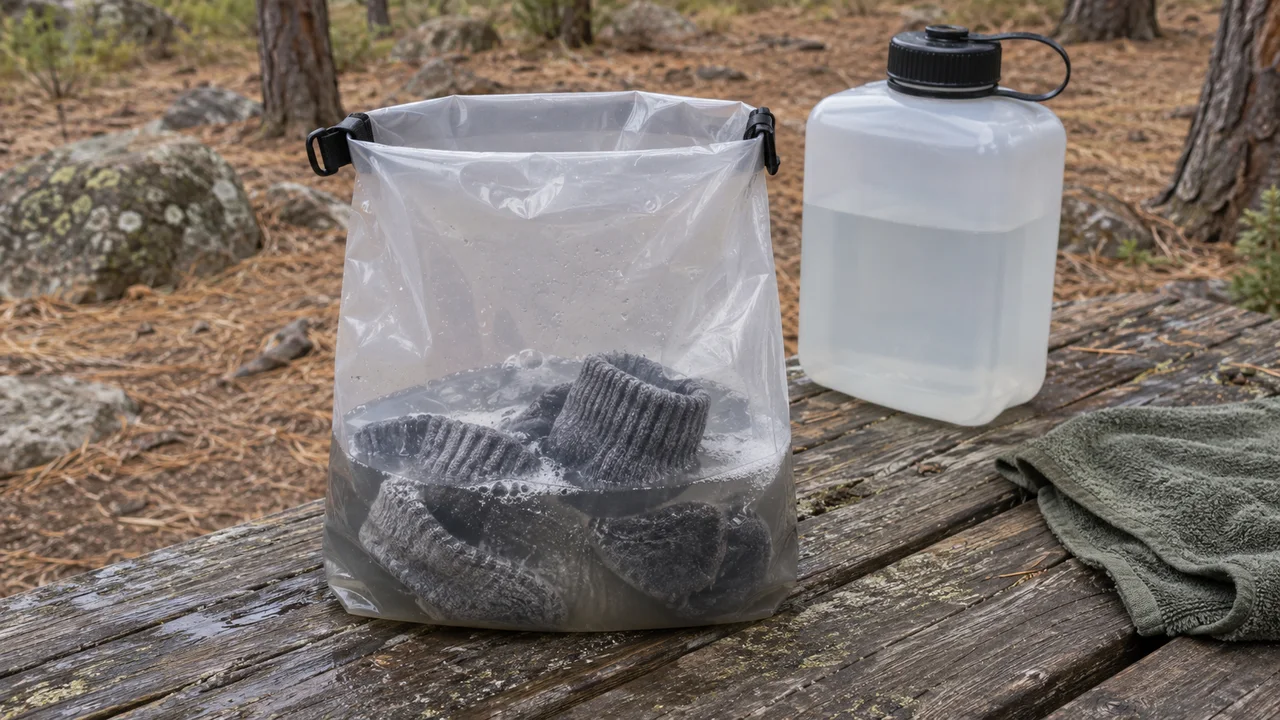
Choose the washing place before opening the bag. Olympic National Park’s sanitation guidance requires washing clothes at least 200 feet from campsites and water sources, minimal soap, and disposal of soapy water at least 200 feet from lakes or streams. Even biodegradable soap must stay out of streams and lakes. Follow the rules at your own destination; use designated washing facilities where provided.
A creek rinse is not a substitute for a planned washing place. Carry water to the permitted location and keep enough for rinsing. If you cannot meet the water, washing and drying requirements, plan a laundry stop or carry additional clean pairs before setting out.
What if the washed pair is still wet in the morning?
Change the plan before using up the last clean pair. A rotation works only when cleaning and drying finish before the next change is due.
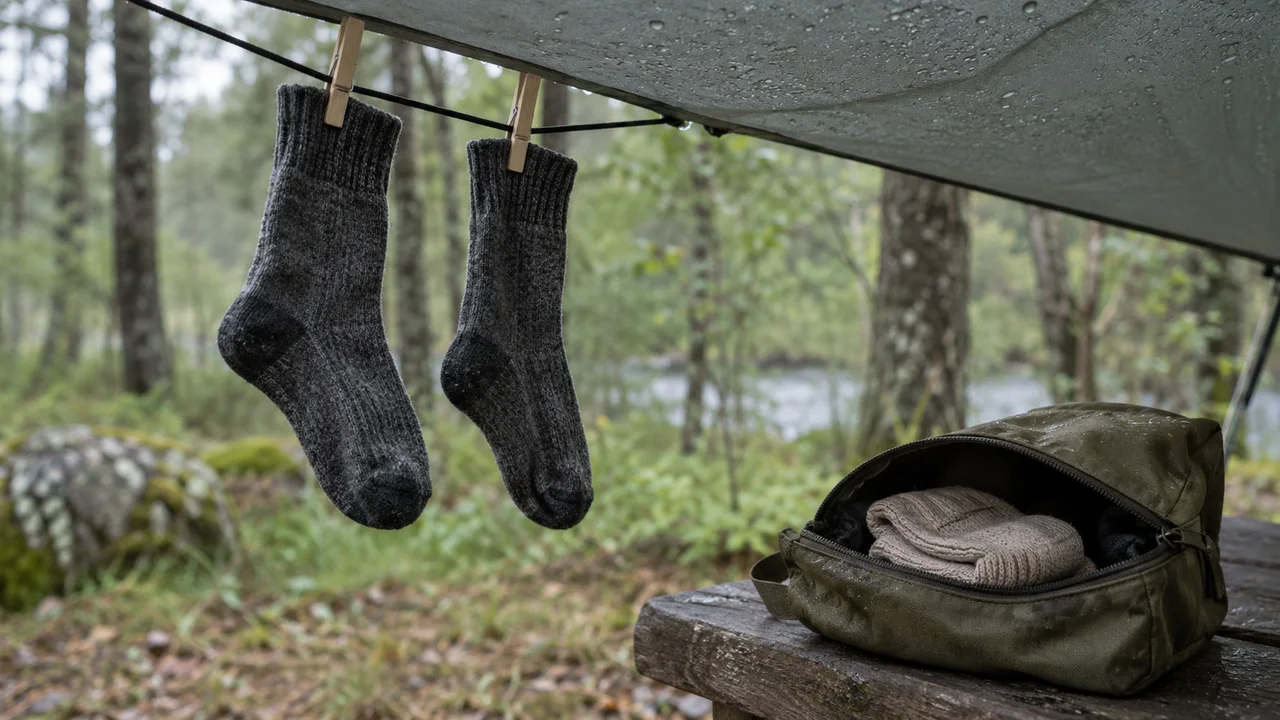
Use these roles as a packing example, rather than a fixed pair-count rule:
- On your feet: the pair currently being worn.
- Being washed or dried: a used pair that has not yet completed both steps.
- Ready to change into: a clean, fully dry pair kept protected.
If all your spares occupy the drying role, the rotation has no ready pair. Allow more drying opportunity, reach a laundry facility, shorten the next stage or arrange resupply. Do not wash every remaining dry pair together without considering what you will wear while they dry.
Before the next morning’s departure, check each pair’s status: washed or merely aired, dry or still damp, ready or still in the queue. If wet boots are part of the problem, use the separate guide to drying hiking boots overnight. Neither guide promises an overnight drying time.
Does the 40-day sock story show how long you can reuse a pair?
No. Darn Tough’s 40-day account describes personal wear during lockdown, with no washing or rinsing. The writer reports stiff, crusty footbeds despite limited odor. It is a brand story about one wearer’s experience, not a controlled hygiene study of multi-day hikers.
That account cannot establish that wearing the same socks for three days is safe, or that changing every two days is suitable for you. The public-health guidance above supports a daily clean change; the sources provide no universal allowance for repeated unwashed wear. Lack of smell does not resolve that evidence gap.
When is this more than a laundry problem?
The NHS athlete’s-foot guidance describes itching and sore or flaky skin, and says wet or sweaty feet increase susceptibility. Ask a pharmacist about suspected athlete’s foot. Seek medical advice if pharmacy treatment fails, pain is substantial, or a foot or leg is hot, painful and red. Redness may be less visible on brown or black skin. People with athlete’s foot and diabetes or a weakened immune system should see a doctor.
Do not use the rotation table to diagnose an infection or choose treatment. This page provides general information; existing foot problems need advice from a clinician or podiatrist.
Before you close the pack
Check that you can name the next clean, dry pair, the pair waiting for washing, and the pair still drying. If there is no next clean pair, solve that shortage in the route or packing plan. Saving laundry is useful only when the plan still allows you to change socks and look after your feet.
This guide compares public-health guidance, a manufacturer’s care instructions and Olympic National Park’s sanitation rules, all read on 16 October 2026. The rotation checklist is our practical synthesis. We carried out no sock wear trial, microbial test or drying-time measurement.