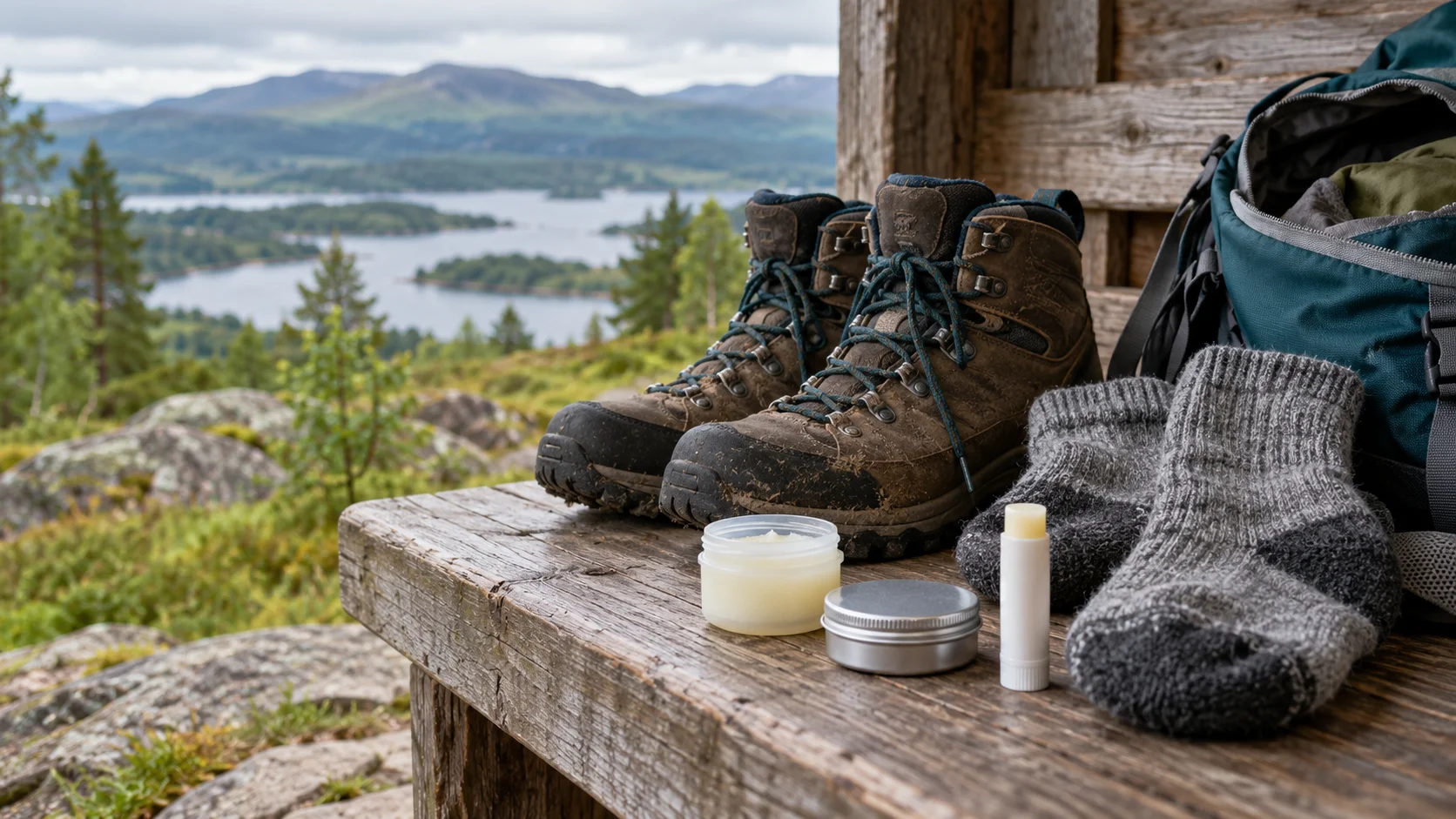
Vaseline petroleum jelly can help prevent chafing, including on feet and thighs. When comparing anti-chafe balm vs Vaseline or Bag Balm for a long walk, choose by the exact formula, application directions and how the product works with your socks and boots.
A dedicated stick offers a different application format; Bag Balm combines petrolatum with lanolin and other ingredients. The comparison below covers these options for preventing rubbing during walking, with practical checks for sweat, textile transfer and comfort.
For long walks, start with a product labeled for the intended skin area and pair it with moisture-wicking socks and correctly fitting footwear. The American Academy of Dermatology recommends petroleum jelly for chafing-prone areas. A stick’s dry feel is a texture characteristic; manage damp socks and boot fit separately. Use the table to compare the products, then rehearse your chosen combination before a demanding walk.
What is different about the three options?
The main differences are the ingredient blend, application format and product-specific directions. Compare the exact pack: “balm” covers many formulations.
| Product | What the maker lists | What to check before walking |
|---|---|---|
| Vaseline Original Healing Jelly, US | White petrolatum USP 100% | Match the pack to the Original formula; follow its directions and check comfort and transfer with your walking kit. |
| Bag Balm Original / Hand & Body | Petrolatum, lanolin, paraffin wax, water and 8-hydroxyquinoline sulfate | External use only; discontinue if irritation occurs. Read the actual pack before use. |
| Body Glide Body anti-chafe stick | Caprylic/capric triglyceride, cetearyl alcohol, ozokerite wax, glyceryl behenate, stearyl alcohol, allantoin and tocopherol | Apply before activity or dressing; reapply as needed. External use on intact skin only; some fabrics may stain. |
Formulas and directions: Vaseline’s US Original Healing Jelly product information, Bag Balm’s FAQ and Body Glide’s Body product information, accessed October 27, 2026. Body Glide is the named stick example here; check other balms individually.
Is Vaseline anti-chafing, including inside socks?
Yes. Petroleum jelly is an accepted option for reducing rubbing at problem areas, including feet. The American Academy of Dermatology’s 5 ways to use petroleum jelly for skin care specifically includes feet and thighs in its chafing advice.
For a walker, footwear and socks remain part of the setup. The AAD’s How to prevent and treat blisters, updated July 6, 2026, recommends moisture-wicking socks and shoes that fit without being too tight or too loose. A friction barrier belongs alongside those measures.
If you already use plain petroleum jelly comfortably, assess it with the socks and boots you intend to wear. Pay attention to folds, fit and skin symptoms during a shorter outing. For the broader choice of barriers and clothing, see the anti-chafe balm guide.
Is Bag Balm good for chafing?
Bag Balm’s maker includes chafing among its uses, so it is an option to assess under its directions. Its formula combines petrolatum with lanolin, paraffin wax, water and 8-hydroxyquinoline sulfate. Choosing it means choosing that blend rather than plain petrolatum.
The maker specifies external use and says to discontinue if irritation occurs. Check the product label and your experience with its ingredients before using it for a long walk. If it irritates your skin, stop using it and seek advice if the reaction persists.
Choose between the ointment and a stick partly by how you will apply and carry it. During a kit rehearsal, check whether the container closes securely and whether you can use it conveniently at a suitable stop.
What changes when you choose a dedicated anti-chafe stick?
A stick allows direct application from its container. The Body Glide Body example uses a blend containing wax, triglyceride and fatty alcohols, and its directions cover friction-prone areas such as feet and thighs.
The maker says to apply before activity or getting dressed and reapply as needed, particularly in hot or humid conditions. Follow that wording when planning access to the product. A planned break is an opportunity to check your skin and clothing; decide on reapplication from the label and conditions.
Body Glide’s precautions specify external use on intact skin and warn that some fabrics may stain. Read the precautions as well as front-of-pack claims. For inner-thigh rubbing, use the thigh-chafing and liner-fit guide to check garment coverage with the chosen product.
Does petroleum jelly’s occlusion trap sweat?
Occlusion describes moisture retention in the skin. It should not be read as proof that petroleum jelly seals sweat inside a boot, or that a dry-feeling stick lets more sweat escape.
In a 1992 human skin study, Ghadially and colleagues examined petrolatum after acetone had disrupted the skin barrier. They found it within the stratum corneum—the outer skin layer—with normal barrier recovery despite its occlusive properties. The experiment concerned skin-barrier recovery; walking-footwear decisions also involve socks, fit and moisture during activity.
Keep the practical response focused on those conditions. Check damp or bunched socks, reassess footwear fit and follow the product’s reapplication directions. A sweat-resistance claim still needs to be used alongside moisture management and attention to skin symptoms.
How do you check the setup inside socks?
Rehearse the chosen product with your actual walking socks and boots. This preparation routine helps you notice a troublesome seam, changing fit or visible transfer while you can still adjust the kit.
Before dressing, examine the sock interior. Look for folds and seams that may sit against a rubbing area, then put the sock on smoothly and check the fit inside the boot.
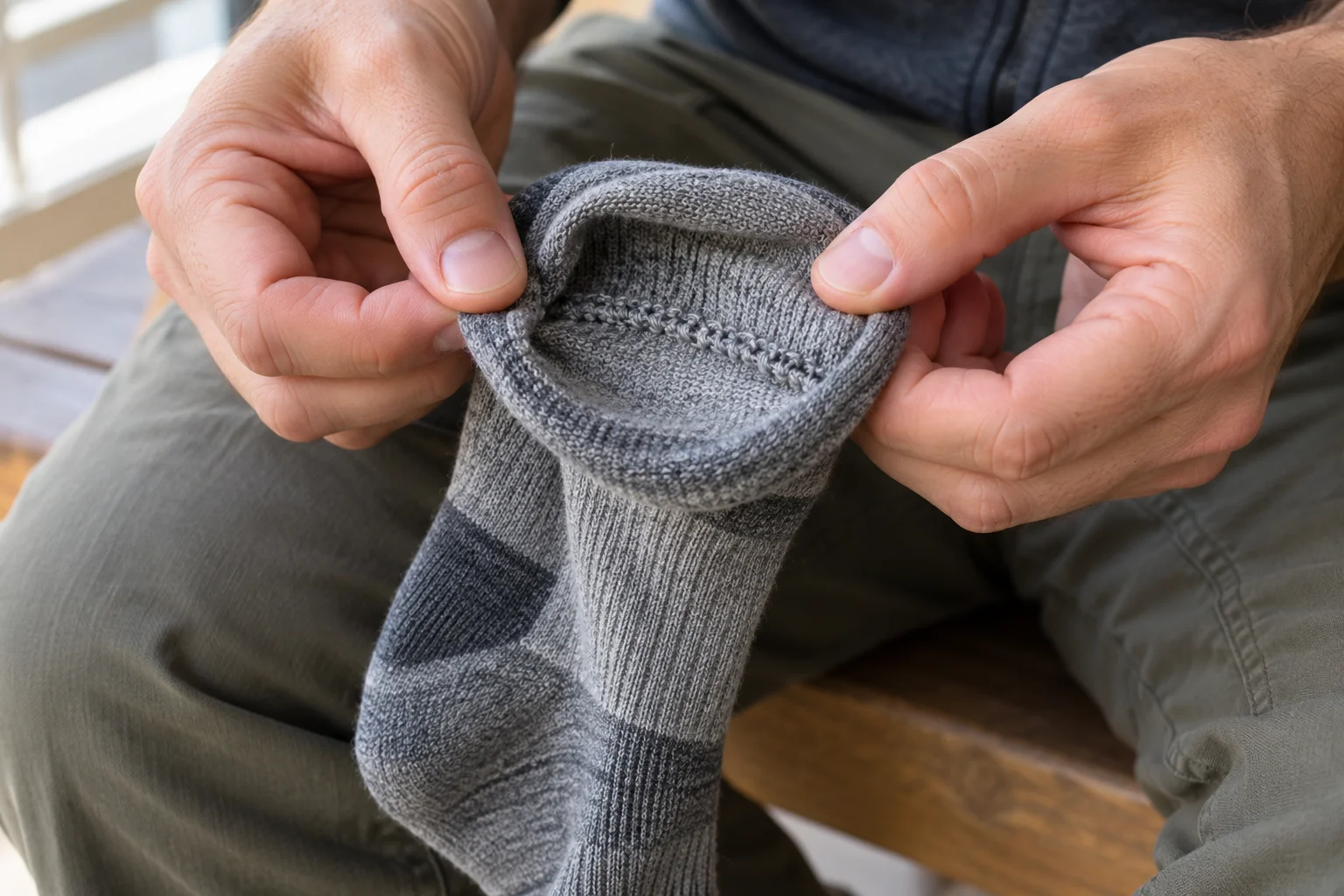
Use the product according to its directions, then take a shorter walk in the intended kit. At a suitable stop, inspect the setup:
- Skin: stop the activity if pain, discomfort or redness appears.
- Socks: check for dampness, bunching or a fold against the rubbing area.
- Boots: reassess lacing and fit if you notice pressure or unexpected foot movement.
- Product: check the label before deciding whether reapplication is appropriate.
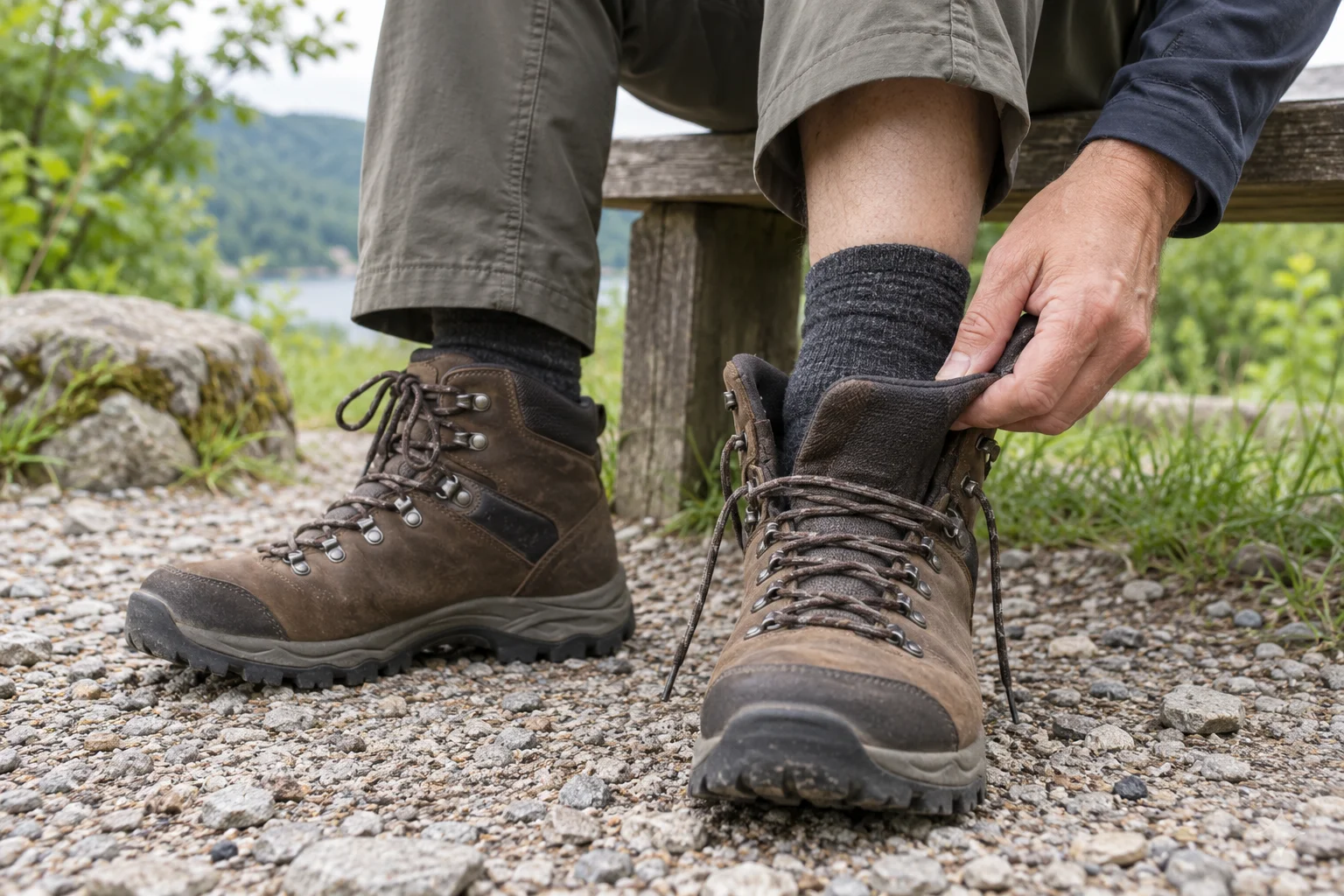
Note what changed so you can adjust the next outing. If the same seam or fit problem keeps returning, address the sock or footwear before extending the walk.
Will it stain socks, and how should you wash them?
Check fabric warnings for every product, including a dry-feeling stick. Body Glide’s precautions explicitly warn that some fabrics may stain. Include the washing step in your kit rehearsal: inspect the socks after use and again after laundering according to their care label.
For its wool hiking socks, Darn Tough’s April 30, 2026 care guide advises cold water, a gentle suitable detergent, no bleach or fabric softener, and air drying or low-heat tumble drying. Use your own sock maker’s instructions to choose the cycle, detergent and drying method.
If residue remains after permitted washing, consult the sock maker’s care advice before trying a stronger cleaner or hotter cycle. Inspect the knit and fit as well as appearance before wearing the pair again.
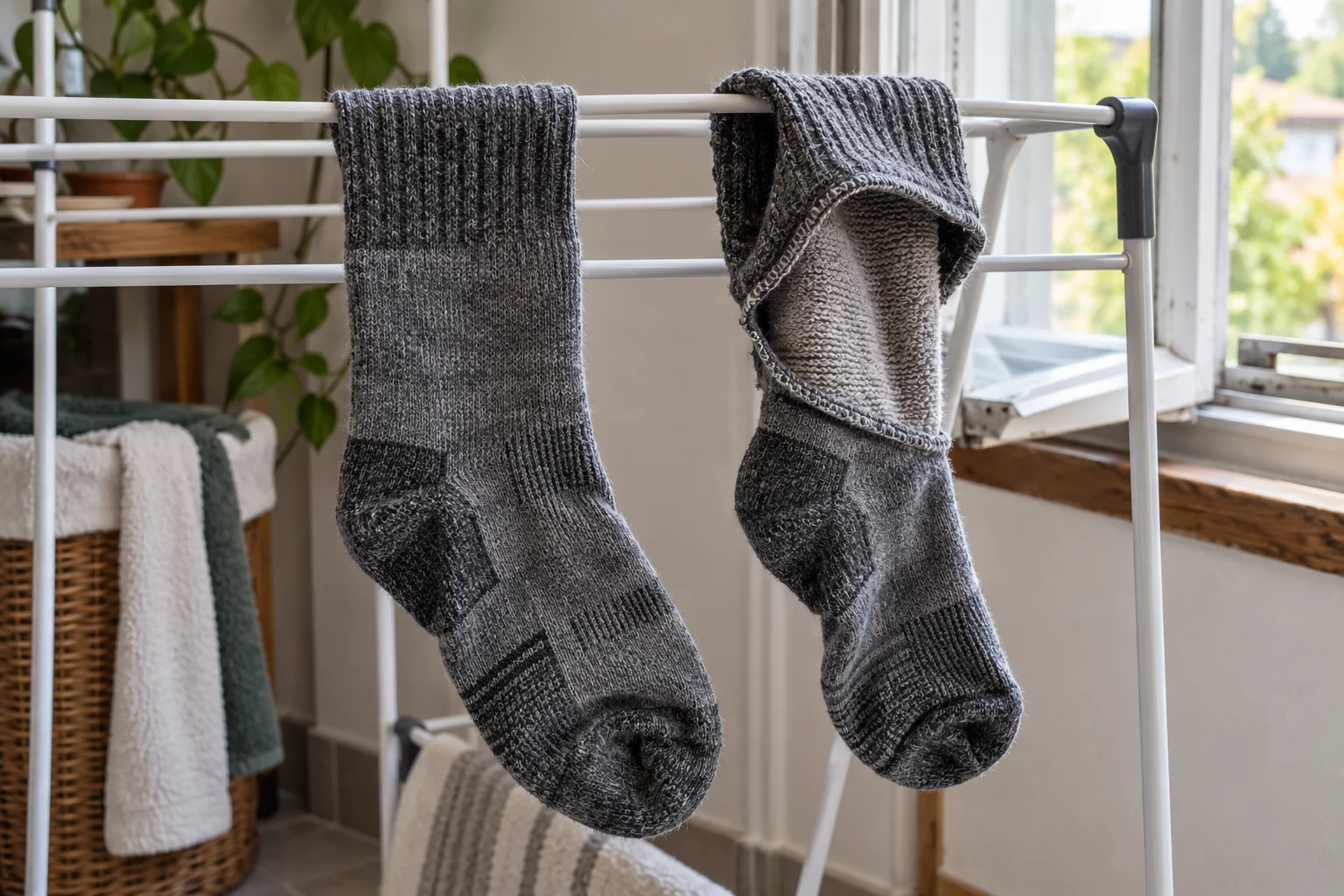
For a trip spanning several days, the sock washing and rotation guide covers the next decision: managing worn pairs between walks.
Which should you pack for a long walk?
Pack the option whose directions suit the skin area and whose application, comfort and fabric care work with your rehearsed kit. Use these choices to narrow the decision:
- Considering plain jelly: Vaseline Original supplies the straightforward petrolatum formula; check the exact product and your sock-and-boot combination.
- Considering Bag Balm: account for its full ingredient blend and stop using it if irritation occurs.
- Wanting direct stick application: compare the named stick’s directions and fabric warnings, then check it with the garments it will contact.
Whichever you choose, keep the container accessible and use skin symptoms as the signal to stop. The AAD advises stopping activity for pain, discomfort or redness. Seek medical advice for a blister with pus, increasing pain or swelling, or surrounding redness; a clinician or podiatrist can advise on care.
Return to the walking and foot-care blog for further preparation guides.
Sources and update
Updated October 27, 2026. Source documents: the American Academy of Dermatology’s 5 ways to use petroleum jelly for skin care and How to prevent and treat blisters (updated July 6, 2026); Vaseline’s US Original Healing Jelly product information; Bag Balm’s FAQ; Body Glide’s Body ingredients, directions and precautions; and Darn Tough’s How to Wash and Care for Hiking Socks to Last Years (April 30, 2026). All accessed October 27, 2026. The 1992 petrolatum study is linked above and below.