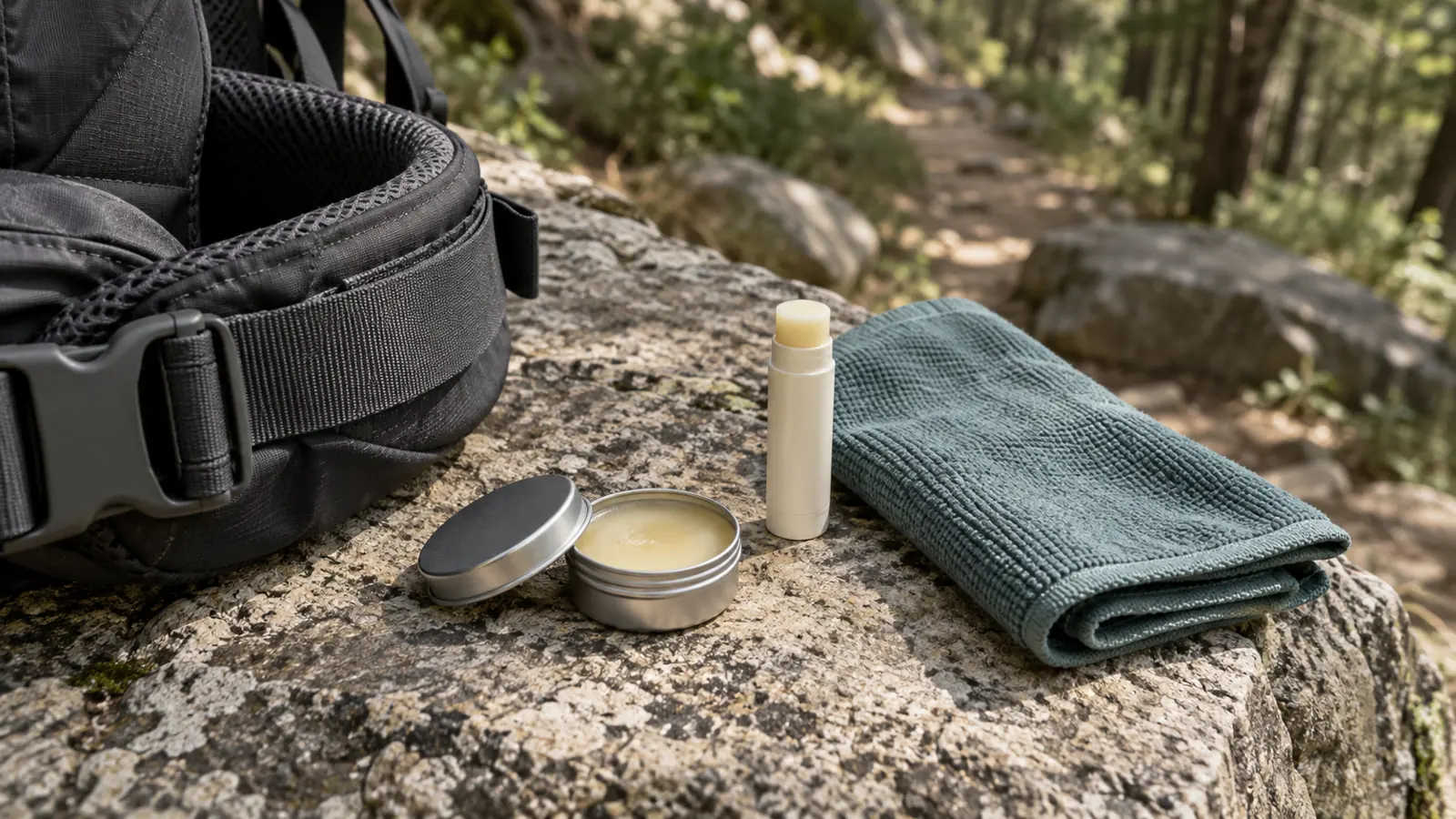
A poor choice of chafing cream for thighs can leave a long loaded walk painfully interrupted when sweat wash-off, a missed reapply check or a bunched liner catches you out.
For rucking, choose a barrier labeled for the intended skin area, follow its reapplication directions and pair it with a quick-dry liner that keeps covering the rubbing patch; no universal reapply interval or measured sweat wash-off rate is established by the sources here. Treat planned stops as opportunities to check skin and clothing, with earlier checks when conditions change. Pain, discomfort or redness means stopping the activity.
Choose from the label before choosing the format
Choose a cream, gel or stick by its intended use, directions and warnings, then consider whether you can carry and apply it conveniently. A format name alone does not establish protection time under a loaded pack.
The table compares selection checks rather than awarding a winning product. The two named examples illustrate different label wording: Monistat’s example is a gel; Body Glide’s is a stick balm.
| Selection check | What to look for | Dominant Failure Mode & Prevention |
|---|---|---|
| Intended area and use | Check that the actual pack’s directions suit external use at the thigh contact area. | Assuming every product sold under a familiar brand has the same purpose → read the exact product label. |
| Reapplication directions | The fetched Monistat gel label says to apply as needed; Body Glide’s directions also emphasize hot or humid conditions. | Turning an as-needed instruction into an invented hourly schedule → separate skin checks from label-directed applications. |
| Sweat and washing wording | Look for an explicit maker statement; read removal instructions separately. | Treating resistance as permanent protection → reassess after washing or changed conditions without assuming automatic top-ups. |
| Garment compatibility | Read fabric warnings as well as front-of-pack claims. | Stained or unsuitable walking kit → check compatibility on a practice garment before the long walk. |
| Carry and access | Choose a container you can close securely and reach at a suitable stop. | Product buried in the pack when needed → decide where it lives during a kit rehearsal. |
For a concrete label example, the fetched Monistat Care Chafing Relief Powder Gel Drug Facts lists Dimethicone 1.2% and identifies its purpose as a skin protectant. That is this gel’s active-ingredient concentration, not an application dose or evidence that it lasts longer than another formulation. Its directions give no walking-hour interval. See the DailyMed label.
Sweat resistance does not tell you the wash-off rate
A sweat-resistance claim cannot tell you how much barrier remains after a sweaty climb, rain or a wash unless the maker supplies evidence for those conditions. Keep the claim, the removal method and the reapplication directions separate.
Body Glide’s product page describes its stick as water- and sweat-resistant and says mild soap removes it. Those statements provide neither a quantified sweat wash-off rate nor a rucking protection duration. Follow the directions rather than extending the marketing wording into an all-walk guarantee.
Fabric claims deserve the same scrutiny. That page’s marketing describes clothing compatibility, but its warnings allow for staining of some fabrics. A practice-garment check is a practical precaution; it does not establish compatibility with every liner.
Pair the barrier with a liner that covers the contact patch
Start with moisture management, then check coverage in motion. The American Academy of Dermatology’s activity guidance recommends moisture-wicking, loose-fitting clothing and avoiding cotton because it takes up sweat and moisture that can contribute to chafing.
For a thigh liner, look for wicking and quick-drying claims, but check how it behaves beneath your walking shorts. Those terms do not supply a measured drying time, and a garment’s appearance cannot prove either property. Wear the intended pack and move through walking strides: inspect whether the inner panel stays smooth, a seam sits on the rubbing patch, or the leg opening rolls upward. These are practical kit checks, not a prescribed compression level.
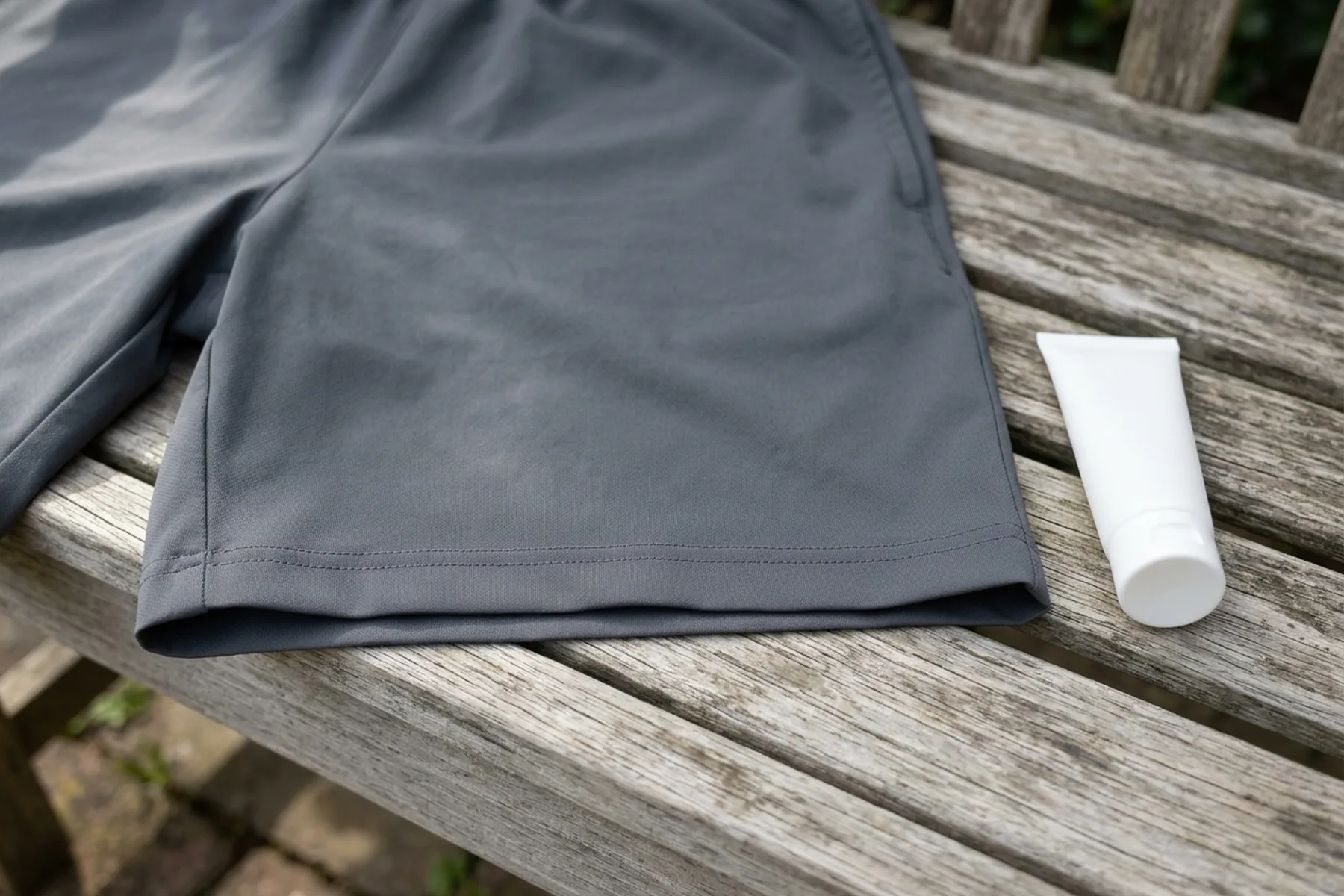
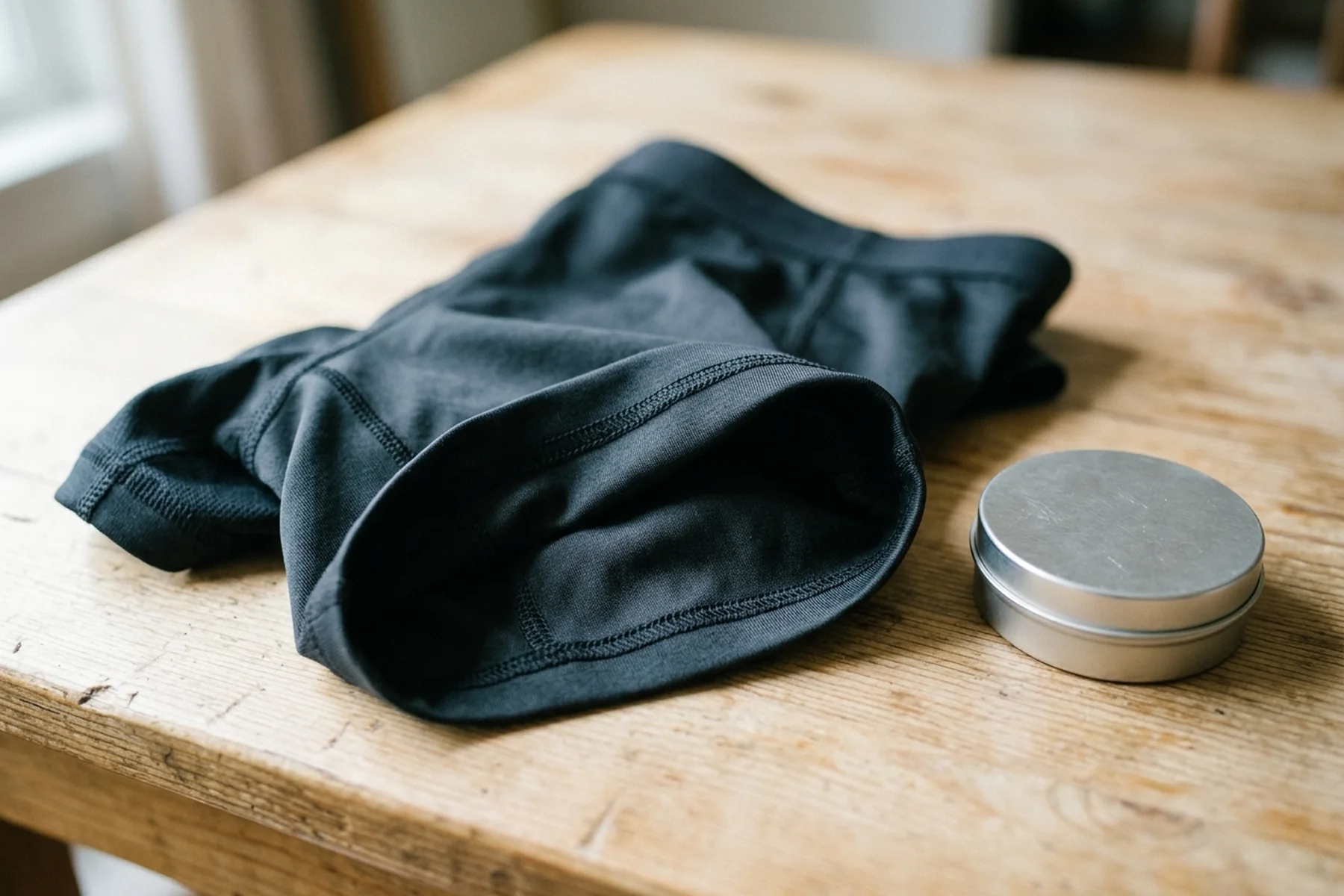
Rules-of-Thumb — use the rubbing patch as the physical threshold. If the liner hem rises into the inner-thigh contact patch during a loaded stride, change its fit or coverage before the long walk. The leg opening needs to remain below that patch through movement. If a fold or seam repeatedly crosses the same spot, adjust or change the garment instead of relying on extra cream. Any pain, discomfort or redness overrides the fit check: stop the activity.
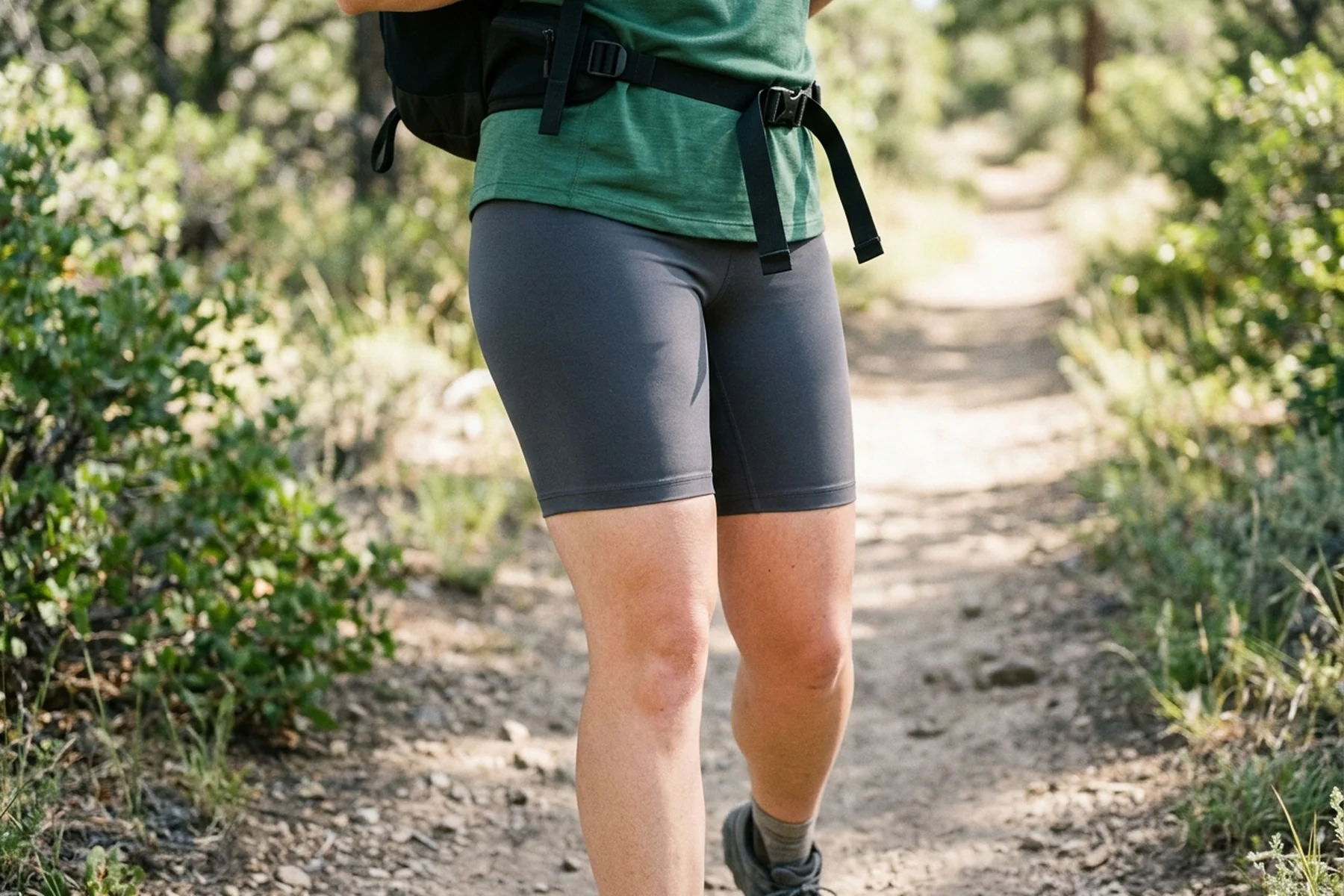
A universal inseam length would miss differences in body shape and where contact occurs. Check your actual rubbing area and walking kit together.
Plan checks; let the label govern reapplication
Use planned stops to inspect intact, symptom-free skin and the liner; a stop is not an automatic instruction to add product. Review sooner after washing or a markedly wetter section, and follow the chosen label when deciding whether to reapply.
As a practical preparation routine, begin with dry skin and follow the product’s application directions before dressing. Monistat’s swimsuit preparation page specifically advises its gel after showering, on dry skin, before putting on a swimsuit. Applying that preparation idea to walking is an editorial suggestion, not a measured rucking protocol.
At a suitable private stop, check for clothing movement, damp folds and skin symptoms. Correct the garment problem first. If skin remains intact and symptom-free and reapplication is appropriate under the label, dry the area beforehand. Do not keep applying over irritation to finish a march: the AAD advises stopping activity for pain, discomfort or red skin.
Keep the container accessible along with any spare liner you decide to carry. Rehearse access while wearing the pack so a planned check does not require emptying it onto the trail.
Count rehearsal checks and the cost of a failed setup
Use a practice-walk log to plan opportunities to inspect the kit, without turning it into a dosing schedule. Record the product, liner, conditions, application time, checks and any symptoms alongside your loaded-walk training plan.
Formula: total planned check entries = practice walks × planned checks per walk.
Worked example: Assume 3 practice walks and 4 planned checks per walk: 3 walks × 4 checks/walk = 12 planned check entries. Both inputs are planning assumptions, not a label dose, a reapplication interval or evidence that waiting between checks is safe. Check sooner when conditions change; stop when symptoms appear.
The total cost of the setup includes cream used up, a liner that needs replacing, time spent adjusting clothing and a walk stopped by rubbing. Buying another container while keeping a liner that rides up can repeat the same failure. Use the general anti-chafe balm guide for background on barrier options, then assess the product and garment together on your next practice walk. This is a practical TCO check, not a quantified saving or a reason to continue with painful skin.
Stop when skin needs more than prevention
Stop the activity for pain, discomfort or redness. Raw or broken skin, a persistent rash or a reaction to a product needs advice from a pharmacist or clinician rather than this intact-skin prevention routine. If you have diabetes or concerns about healing, seek individual advice before relying on a self-care plan.
For a blister, the NHS advises urgent help if it is very painful, keeps returning or shows infection signs such as heat, green or yellow pus, or surrounding redness, which can be harder to see on brown or black skin. In the UK, use NHS 111; elsewhere use the local equivalent. This blister guidance does not diagnose every thigh rash.
Method and sources
Updated 19 October 2026. This independent guide uses the AAD and NHS guidance, the DailyMed product label, and the Body Glide and Monistat maker pages linked above, all accessed on 19 October 2026. Public guidance supports the clothing and stop decisions; maker pages support only their own directions and attributed claims. This is general information, not medical advice.
The liner movement check, rehearsal log and cost discussion are editorial planning suggestions. The numerical example counts assumed checks only. The cited material establishes no measured thigh protection duration under a pack, sweat wash-off rate, universal reapplication interval or best-performing cream. Further walking preparation guides are available in the blog index.